



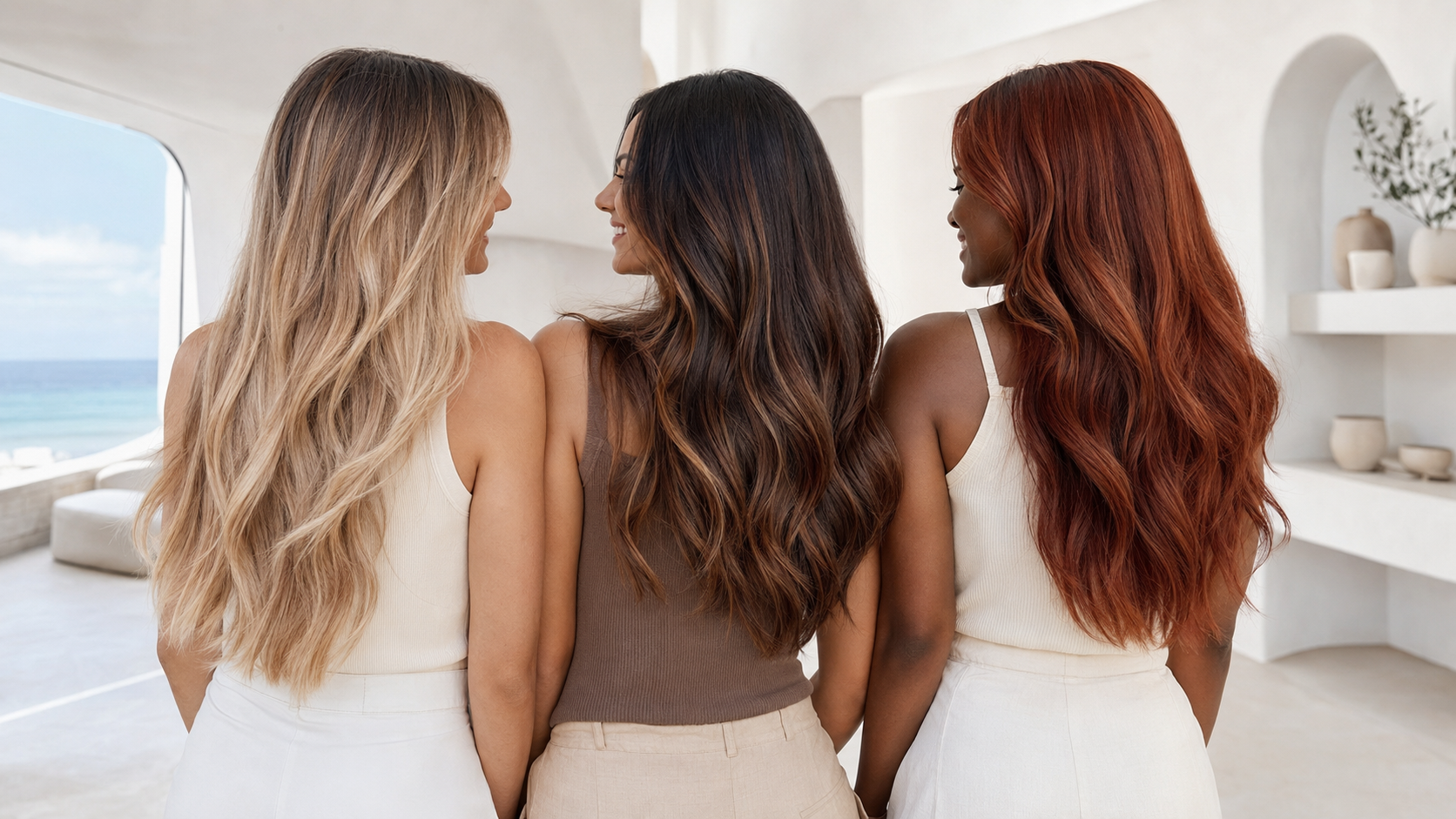
Colour is the single biggest investment most clients make in their hair — and the fastest one to waste with the wrong aftercare. After four decades of colouring hair across our Cape Town salons, the pattern is consistent: the difference between colour that looks fresh at week six and colour that looks tired at week two is almost never the colourist. It is what happens at the basin at home.
This guide covers the full system — why colour fades, what a colour-safe routine actually looks like, how to handle blonde, grey, brunette and red hair differently, and when to book a salon service instead of reaching for a bottle. Each section links to a deeper guide if you want the detail.
Why hair colour fades in the first place.
Permanent colour lives inside the hair shaft, under the cuticle. Every wash lifts the cuticle slightly and lets a little pigment escape — add heat styling, UV exposure and mineral-heavy water, and the leak gets faster. Red pigment molecules are the smallest and escape quickest; cool blonde tones do not fade so much as shift warm as underlying pigment shows through.
The full mechanics are in our guide to why hair colour fades, and every product we range specifically to slow it lives in the Colour Fade collection.
The colour-safe routine.
Four steps, in order of impact:
Wash less, and wash sulphate-free. A gentle, sulphate-free shampoo is the highest-leverage swap for coloured hair. Our Colour Treated Hair collection holds every colour-safe wash and care product we stock — 300-plus options across Kérastase, Redken, Pureology, Joico and more.
Condition every wash, mask every week. Colour-treated hair is more porous than virgin hair. A weekly mask keeps the cuticle smooth, which physically holds pigment in — see our guide to caring for dry colour-treated hair.
Protect before heat. Every pass of an iron accelerates fade. Heat protection spray is non-negotiable on coloured hair.
Rebuild the bonds colour breaks. Lightening and permanent colour break internal bonds. Bond builders — Olaplex, K18, acidic bonding ranges — repair the structure that keeps colour looking glossy rather than flat.
Blonde, silver and grey hair.
Cool blonde is maintenance colour. The enemy is warmth — yellow and orange undertones that surface as toner fades. Violet pigment neutralises yellow, which is the whole job of purple shampoo; our guide covers how often to use it without overtoning, and the blonde hair care guide covers the full routine. If brass has already taken hold, start with how to get rid of brassy hair.
Natural grey and silver hair plays by similar toning rules with different texture needs — grey hair is typically coarser and drier, and yellows with sun and product build-up. The full approach, including the blend-or-cover decision, is in our grey hair care guide, with toning washes in the Silver & Blonde Shampoo collection.
Brunette and red hair.
Brunettes fade warm — red and orange creep in as cool ash tones wash out, which blue-pigmented brunette lines counteract. Red is the fastest-fading colour in the chair: the pigment molecules are small enough to escape with every wash. Wash cool, wash rarely, and use colour-depositing care between appointments — the full strategy is in our guide to stopping red hair fade.
Toners and glosses — salon or at home?
Toner adjusts tone; gloss adds shine and refreshes depth. Both buy weeks of life between colour appointments, and both now exist in genuinely good at-home versions — Redken Acidic Color Gloss being the standout. When to do which at home and when to book a salon toner is covered in toner vs gloss.
The South African factor.
Our sun is not neutral. High UV breaks down pigment the same way it fades fabric, and summer at the pool adds chlorine — which builds up on blonde hair and drags it green-grey. Add hard water in parts of the country depositing minerals that dull colour, and SA hair simply needs UV-filtering leave-ins and periodic clarifying more than European routines assume.
Product systems that do the work.
Colour care works best as a matched system rather than mixed singles. The ranges we rate, all as authorised stockists: Kérastase Chroma Absolu and Blond Absolu, Redken Color Extend, Pureology Colour Fanatic and Strength Cure Blonde, Schwarzkopf BC Color Freeze, Goldwell Dualsenses Color, Milkshake Silver Shine and Moroccanoil Blonde & Colour.
When it needs a chair, not a bottle.
Colour correction, balayage, grey coverage and major tone changes are salon work — home fixes on top of complex colour usually add a correction bill. Our guide to hair colour in Cape Town covers the services themselves, and any of our 24 salons will do a colour consultation before you commit.
FAQs.
How often should I wash colour-treated hair?
Two to three times a week is the practical ceiling for most colour. Every wash costs pigment — dry shampoo between washes stretches both your colour and your blow-dry.
Does purple shampoo work on brunette hair?
Barely — violet neutralises yellow, which is a blonde problem. Brunettes fighting orange-red warmth need blue-pigmented products instead.
How long should salon colour last?
Permanent colour holds four to eight weeks before regrowth and fade justify a visit; toners and glosses hold three to six weeks. A proper aftercare routine sits at the top of those ranges rather than the bottom.
Can I fix brassy hair at home?
Mild warmth, yes — toning shampoo and a pigmented mask will neutralise early brass. Strong orange after lightening is a salon toner job.
Is it worth buying salon colour care instead of supermarket products?
For coloured hair, yes — the surfactants are gentler and the pigments and bonding agents are the actual technology you are paying the salon to protect. It is cheaper than colouring more often.
Partners Hair has coloured Cape Town's hair since 1984 — 24 salons, 250-plus stylists, and an online store carrying only ranges we use behind the chair. Free delivery on orders over R390.
Share:
Scalp Build-Up: How to Remove It and Stop It Coming Back
Grey Hair Care: Blending, Covering or Embracing Silver — a Salon Guide