



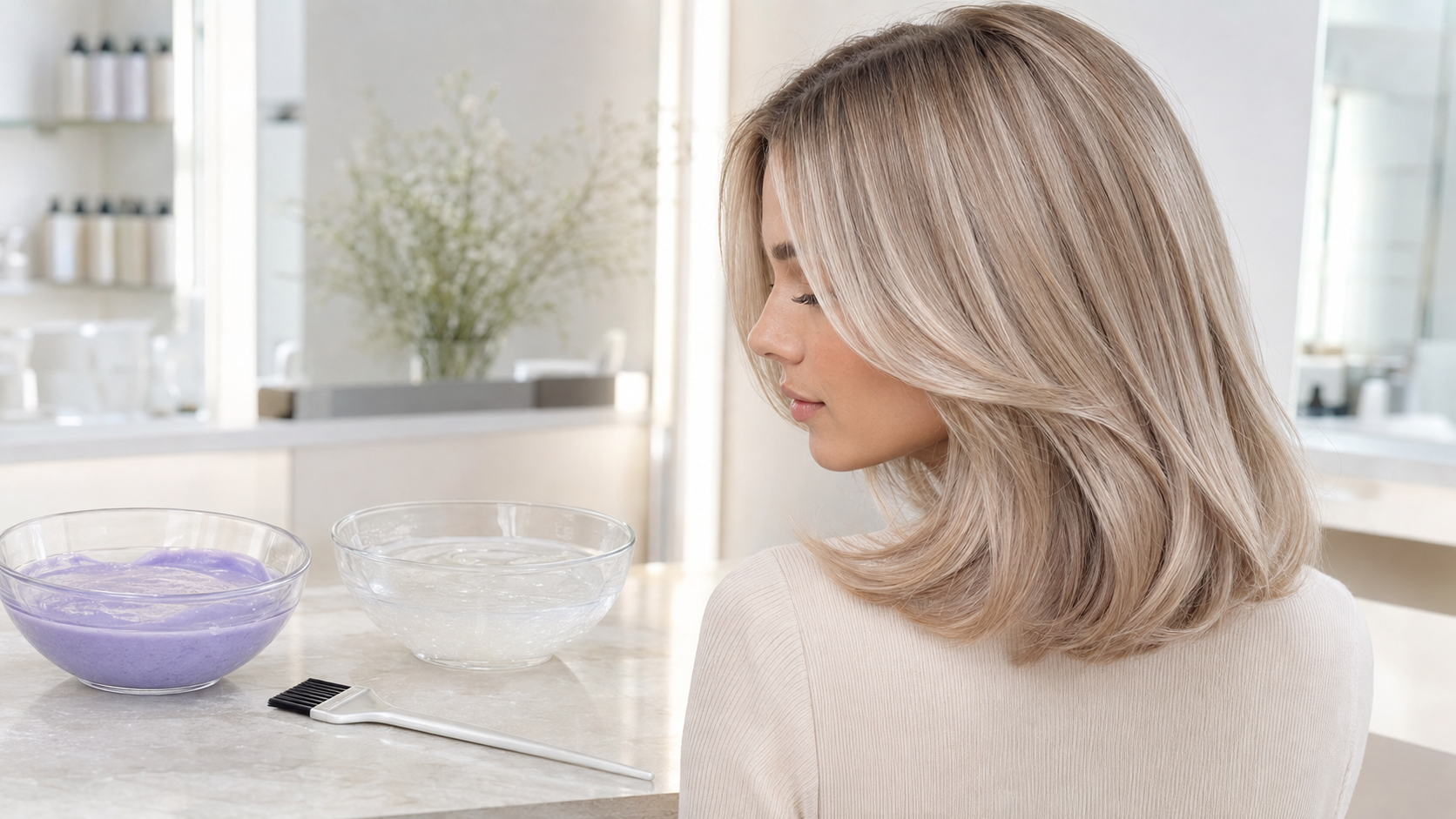
“Toner” and “gloss” get used interchangeably — including, unhelpfully, by some product packaging. They are related but do different jobs, and knowing which one your hair needs saves both money and a few weeks of the wrong colour.
What a toner does.
A toner corrects tone. It is a sheer, deposit-only colour that neutralises unwanted undertones — violet against yellow, blue against orange, green against red — or nudges a colour cooler, warmer, more beige, more ash. Toner is the reason fresh salon blonde looks expensive: the lightener does the lifting, the toner does the actual colour.
Toners fade in three to six weeks depending on wash frequency, which is why blonde that looked pearl in the chair drifts warm by week five. Toning shampoos and masks — the whole purple shampoo category — are simply micro-doses of toner in wash form, stretching the salon result. How to use them without overshooting is in our purple shampoo guide; if warmth has already won, start with fixing brassy hair.
What a gloss does.
A gloss refreshes the finish. It is an acidic, translucent treatment that smooths and seals the cuticle, adds shine, and can deposit a whisper of tone to revive depth — clear versions add pure shine to any colour, tinted versions warm up faded brunette or richen washed-out red. Think of it as a topcoat: it makes existing colour look newly done without changing it.
Glosses last around four weeks and, because they are acidic and deposit-only, they condition rather than compromise the hair — you genuinely cannot damage hair with a gloss, which is not something you can say about much in colour.
The short version.
Wrong tone — brassy, too warm, too ashy — wants a toner. Right tone but flat, dull or faded wants a gloss. Both at once is common, and a tinted gloss or a salon toner handles both in one step.
At home or in the salon?
At home: maintenance. Toning shampoos and masks between appointments, and an at-home gloss every three to four weeks. Redken Acidic Color Gloss is the category benchmark — a genuine acidic gloss in home form, in clear plus tinted shades — and concentrated violet options live in purple pigment and toning products.
In the salon: correction and precision. Post-lightening toning, colour correction, anything involving orange after a box-dye experiment, and any tone change you want matched to your skin rather than guessed from a box. A salon toner is formulated for your exact underlying pigment — that is the difference you are paying for. Book a consultation at any of our 24 salons, or read the Cape Town colour services guide first.
Where they fit in the routine.
Toners and glosses extend colour — they do not excuse the basics. Sulphate-free washing, weekly masks and heat protection remain the foundation; the full system is in our complete hair colour care guide, with everything colour-safe in the Colour Treated Hair collection.
FAQs.
How often can I gloss my hair?
Every three to four weeks is the sweet spot at home. More often will not hurt the hair — tinted glosses can build depth slightly with heavy repetition, so stick to clear if you gloss weekly.
Does toner damage hair?
Modern acidic, deposit-only toners do not — no lift means no structural damage. Frequent toning can make very porous hair grab too much pigment, which is a tone problem rather than a damage one, and it grows out or washes out.
Can a gloss cover grey?
No — glosses are translucent and blend a low grey percentage at best. Meaningful grey coverage or blending is a salon colour service; our grey hair guide covers the options.
Why did my toner fade so quickly?
Hot water, frequent washing and clarifying or sulphate shampoos strip toner fastest. Wash cooler and less often, switch to sulphate-free, and support with a toning wash weekly — that typically doubles toner life.
Partners Hair — authorised stockists of every range we sell, used behind the chair in 24 Cape Town salons. Free delivery over R390.
Share:
Grey Hair Care: Blending, Covering or Embracing Silver — a Salon Guide
Red Hair Colour Care: How to Stop Red Fading So Fast