



Reviewed by Nicky Spochter, Senior Hair Revival & Smoothing Expert, Partners Hair V&A Waterfront · October 2026
TL;DR:
- Heat protection spray works by coating the hair shaft with a barrier that disperses heat — it slows thermal damage rather than blocking it entirely
- Apply to damp hair before blow-drying, and to dry hair before straightening or curling — both steps matter
- Check the temperature rating on your product: a spray rated to 180°C is not adequate for a straightener set to 230°C
- Heat protection does not prevent damage from repeated exposure over time if temperatures are too high — lower settings plus protection is always better than maximum heat with protection
- Skipping heat protection is one of the most common causes of dry, frizzy, brittle hair we see at Partners Hair
Heat protectant is the most skipped step in most clients’ routines — and the one whose absence causes the most visible, cumulative damage. Here’s how it actually works and how to use it correctly.
Meet the experts:
Royston and Warren at Cavendish Square — Judy, head trainer — Lewis, owner — Jackie at Gardens Centre — Debbie and Nikí at V&A Waterfront — Danny and Charlene at Canal Walk — Lynette, Samantha and Dominique at Constantia Village
01 — How Heat Protection Actually Works
Heat protection products coat the hair shaft with a film of ingredients — typically silicones, polymers, or natural oils — that absorb and disperse heat before it reaches the inner structure of the hair. They slow the rate of thermal damage rather than creating a complete barrier. This is why the temperature rating matters: a product rated to 180°C will not adequately protect hair against a straightener set to 230°C. Match the product’s protection level to the tool temperature you actually use.
“Heat protection slows damage — it doesn’t eliminate it,” says Lewis. “Clients sometimes think having a heat protectant means they can use their tools on maximum heat without consequence. The protectant extends the time before damage accumulates. The lower your tool temperature, the less work the protectant has to do, and the longer your hair stays healthy.”
02 — When to Apply: Damp Hair AND Dry Hair
Most people apply heat protection before blow-drying and then stop. The second application — to dry hair before straightening or curling — is just as important and more commonly skipped. Heat protectant should be applied at both stages: to damp hair before using a dryer, and to dry hair before any heat styling tool touches it. Each heat application is a separate exposure that needs its own protective layer.
“The blow-dry application and the straightener application are not the same event,” says Judy, head trainer. “After blow-drying, the first coat of protectant has done its job. The hair is now exposed again when the straightener goes on. Apply again. It takes ten seconds and makes a significant difference to cumulative damage over weeks and months.”
03 — Temperature Ratings: Match the Product to Your Tool
Every heat protection product has a maximum temperature it’s formulated to protect against. Check the label. A basic spray rated to 150°C is adequate for a low-heat diffuse dry but not for a titanium straightener at 230°C. Professional products like Moroccanoil Perfect Defense, Kérastase Nutritive Serum Oleo-Relax, and Redken One United are all rated to 230°C — matching the maximum setting of most professional tools.
“The temperature rating on the bottle is not marketing — it’s a real formulation threshold,” says Debbie at the Waterfront. “A product rated to 180°C is literally not designed to protect against 230°C. If your straightener goes to 230°C and you’re using a low-rated spray, you’re not protected at that temperature.”
04 — How to Apply Correctly
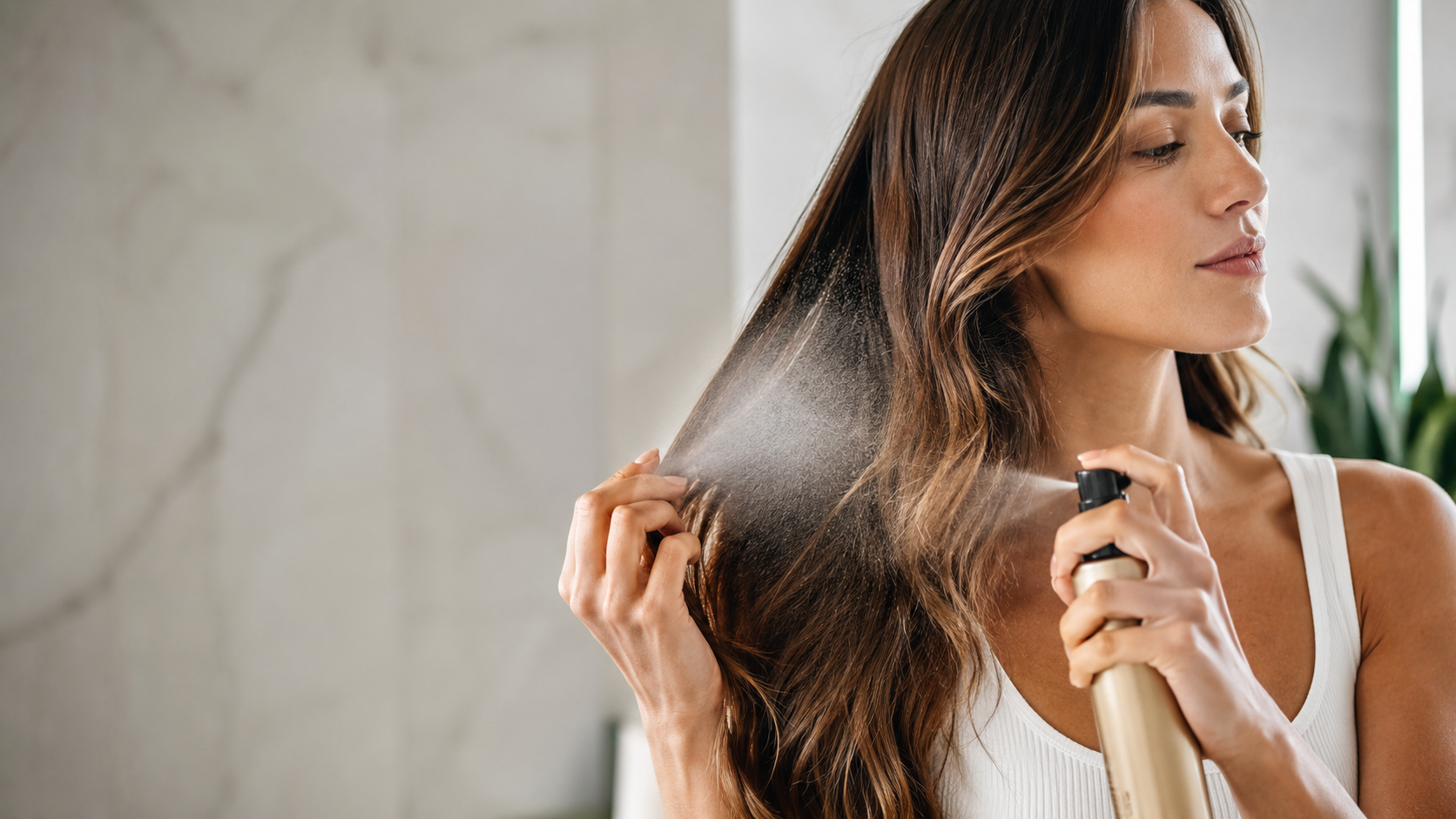
For blow-dry protection: apply to towel-dried damp hair, section by section, before styling. Work it through the mid-lengths and ends — the sections most exposed to heat. Don’t concentrate product on the roots. For straightening and curling: apply to each dry section immediately before the tool passes through. A light, even coat — not saturated, not dripping. Most sprays need only a few pumps from 20–30cm away.
“People either use too little or too much,” says Charlene at Canal Walk. “Too little does nothing. Too much weighs the hair down and can cause it to steam when the tool hits, which actually damages the cuticle. A light, even mist is the goal — the hair should be coated, not wet.”
05 — What Our Stylists Recommend
Moroccanoil Perfect Defense — rated to 230°C, lightweight spray format, suits most hair types. The most widely recommended across our salons for all-round heat protection.

Kérastase Nutritive Serum Oleo-Relax — heat protection plus frizz-sealing in one product. Particularly good for dry, frizzy or colour-treated hair in Cape Town’s humidity.
Redken One United — 22-benefit spray with heat protection to 230°C. Popular with clients who want multitasking: leave-in, detangler, heat protectant and shine in one spray.

Pureology Colour Fanatic — 21-benefit colour-safe spray with UV and heat protection. Recommended for colour-treated hair that needs protection from both sun and tools.

“I recommend Moroccanoil Perfect Defense to almost every client because it’s effective across hair types and the spray is easy to distribute evenly,” says Royston at Cavendish. “For colour-treated clients I switch to Pureology Colour Fanatic because the UV protection matters just as much here as the heat protection.”
Browse the full range in our heat protection collection — everything in stock, from authorised distributors.
06 — Heat Protection in South Africa’s Climate
Cape Town’s UV adds a second source of hair damage that most clients underestimate. UV radiation breaks down hair protein the same way it damages skin — progressively and cumulatively. A heat protectant that also has UV protection is particularly valuable here. Apply a UV-protective leave-in or spray before going outdoors in summer, in addition to your heat protection before styling.
Frequently Asked Questions
Do I really need heat protection spray?
Yes. Heat damage is cumulative — it builds session by session. The effects show up as dryness, frizz, breakage, and dullness over weeks and months. Heat protectant significantly slows this accumulation. It’s the cheapest and most effective preventative step in any hair care routine.
Can I use a hair oil as heat protection?
Some oils provide light heat protection as a secondary benefit — Moroccanoil Treatment, for example, has some thermal protection. But a dedicated heat protection spray rated to your tool’s maximum temperature is more reliable. Use both if you want: oil on the ends for moisture and shine, spray throughout for protection.
How much heat protection spray should I use?
Enough to lightly coat each section without saturating it. The hair should feel slightly coated, not wet. For blow-drying: a few pumps distributed through damp mid-lengths and ends. For straightening: a light mist on each dry section before the iron passes through.
What temperature does my hair protectant need to cover?
Match the rating to your highest-use tool temperature. If your straightener goes to 230°C, use a protectant rated to at least 230°C. Moroccanoil Perfect Defense, Redken One United, and Kérastase Nutritive Serum Oleo-Relax are all rated to 230°C.
Is UV protection in heat spray important in South Africa?
Yes — particularly in Cape Town and coastal cities. SA’s UV is strong year-round and degrades hair protein cumulatively. A spray that combines heat and UV protection (Pureology Colour Fanatic, Redken Color Extend) gives double protection.
Already seeing signs of damage? Read our guide to heat-damaged dry hair for the repair routine.
Shop professional heat protection sprays at Partners Hair, or find your nearest salon for personalised styling advice. Free delivery on orders over R390.
Share:
Best Products for Damaged Hair in South Africa
Bond Builders Explained: Olaplex vs K18 vs Acidic Bonding