



Expert guidance from the Partners Hair salon team · October 2026
Tingling, burning, tightness, a scalp that feels sore when you brush or tie your hair up: a sensitive scalp reacts to things other scalps barely notice. The scalp is skin, and the logic is the same as for a sensitive face. Use fewer products and gentler formulas, change one thing at a time and be patient. This guide is part of our complete Scalp Health guide.
Key takeaways
- “Sensitive scalp” describes how the scalp feels (stinging, burning, tightness or discomfort), often with little to see.
- Common triggers include hot water, over-washing, harsh cleansers, fragrance, too many products at once and chemical services.
- The fastest way to calm things down is to simplify: one gentle cleanser, lukewarm water and no new products for a few weeks.
- Always tell your colourist about scalp sensitivity before a colour or chemical service.
- Visible redness, rash, swelling, weeping, thick scale or hair loss is not “just sensitivity”. See a doctor or dermatologist.
What does a sensitive scalp feel like?
Most clients describe a feeling rather than something visible: tingling after washing, burning when a new product goes on, tightness, or tender roots when the hair is pulled back. Heat, sweat, sun, wind and stress can all make it worse.
Sensitivity is easy to confuse with other scalp concerns. Fine flakes and tightness point toward a dry scalp. Recurring oily or yellowish flakes suggest dandruff (see our dandruff shampoo guide). A persistent itch has several possible causes, covered in our itchy scalp guide. More than one can be present at once.
What makes a scalp sensitive?
A stressed skin barrier: very hot water, washing more often than your scalp needs, aggressive scrubbing and strong cleansers can leave the scalp feeling raw and reactive.
Fragrance and preservatives: these are among the most common reasons a hair product irritates.
Too many products: layering dry shampoo, sprays, serums and oils at the roots puts more ingredients on the skin and makes the trigger harder to find (see our scalp build-up guide).
Chemical services: colour, lightener, perms and smoothing treatments can leave a scalp feeling tender for a while afterwards. If your scalp stings during a service, tell your colourist straight away rather than waiting it out.
The routine that calms a reactive scalp
- Simplify for three to four weeks. One gentle cleanser, one conditioner for the lengths and only the styling products you really need. Introduce nothing new during this period.
- Turn the water down. Use comfortably warm, not hot, water, and finish with a cooler rinse.
- Wash gently. Use your fingertips, not your nails, and don’t scrub. Rinse thoroughly so no shampoo or conditioner residue stays on the scalp.
- Keep conditioner off the roots. Apply it from the mid-lengths down unless the product is designed for the scalp.
- Reintroduce one product at a time. Once the scalp settles, add products back one by one, a week apart, so you can see which one causes a reaction.
Which professional products suit a sensitive scalp?
Start with our curated Sensitive Scalp collection. If fragrance seems to be a trigger, our fragrance-free range removes one of the most common causes of irritation. Match the formula to the rest of your hair:
Sensitive scalp, normal to oily lengths: Kérastase Spécifique Bain Vital Dermo-Calm is a lightweight soothing shampoo. For dry lengths, Bain Riche Dermo-Calm is the richer version.

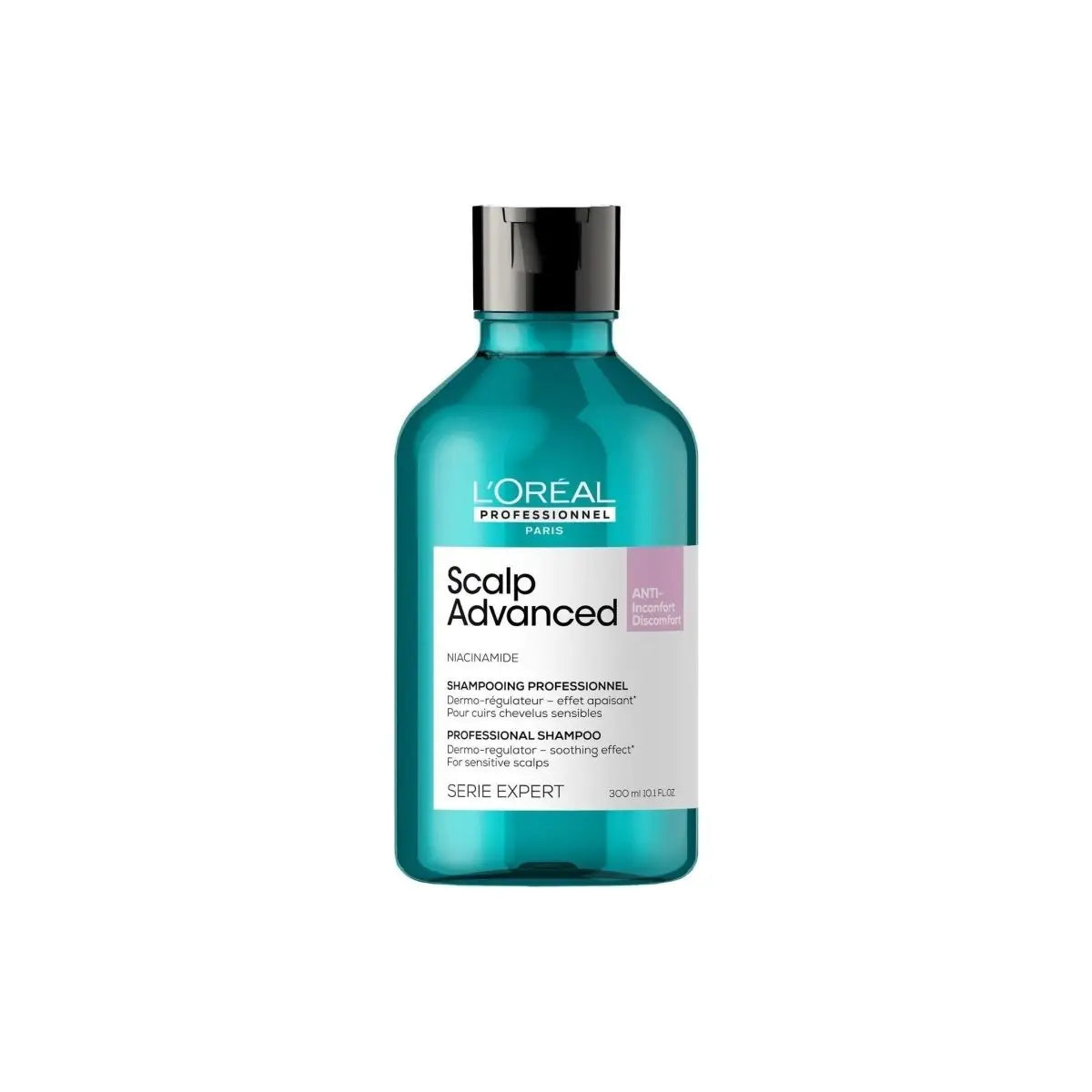
A dedicated soothing range: Schwarzkopf’s BC Soothing Shampoo, part of the BC Scalp Genesis line, is made for reactive scalps. L’Oréal Professionnel Anti-Discomfort Dermo-Regulator Shampoo is another gentle option.

Fragrance-free: ORI Lab Calm Cleanse and Calm Condition are fragrance-free cleanse-and-condition steps for sensitive scalps.

If flaking comes with the sensitivity: once dandruff has been confirmed, Kérastase Symbiose Bain Crème Anti-Pelliculaire is a creamy anti-dandruff cleanser designed for dry, sensitive-feeling scalps, and Symbiose Fondant Apaisant Essentiel is the matching soothing conditioner. Don’t use anti-dandruff products just because the scalp feels uncomfortable.
Whatever you choose, patch-test it first (see the FAQ below), and stop using any product that stings, burns or leaves the scalp red.
If your scalp reacts often, our guides to reading hair care ingredient lists and sulphate-free shampoo help you work out which ingredients to avoid.
Sensitive scalp and colour services
Many clients with sensitive scalps colour their hair comfortably. It just takes planning:
- Tell your colourist about any sensitivity, past reactions or scalp conditions when you book, not halfway through the service.
- Expect a skin allergy test before your first colour and whenever your colourist advises one.
- Don’t wash your hair right before a colour appointment, and avoid scratching or exfoliating the scalp in the days before.
If you have ever had a significant reaction to hair dye, such as swelling, blistering or a rash beyond the hairline, speak to a doctor before your next colour.
“With a sensitive scalp, the answer is almost never another product. We strip the routine back, find the trigger and then build up slowly. Clients are often surprised how much calmer the scalp feels when they’re only using two products.” — Partners Hair salon team
When is it more than a sensitive scalp?
A stylist can help with your routine, product choice and how services are carried out, but we do not diagnose scalp conditions. See a doctor or dermatologist if you notice visible redness or a rash, swelling, weeping or crusting, thick or sharply defined scale, open sores, pain, or sudden or patchy hair loss, or if discomfort doesn’t settle after a few weeks of a simplified routine. Conditions such as contact dermatitis, seborrhoeic dermatitis and psoriasis need medical assessment. Our guide to scalp psoriasis and your hair explains how we work alongside your dermatologist.
Not sure what your scalp is reacting to?
Bring a list of everything that touches your roots, how often you wash and when the discomfort starts. That gives our team far more to work with. Call your nearest salon to book, or walk in.
Ask the Experts · Find your nearest Partners Hair salon · Shop sensitive-scalp care
Frequently asked questions
Can I still colour my hair with a sensitive scalp?
Usually, with precautions. Tell your colourist beforehand, have a skin allergy test when advised, don’t wash or exfoliate the scalp right before the appointment, and ask about techniques that keep product off the scalp. If you have had a significant reaction to hair dye before, check with a doctor first.
Is sulphate-free shampoo better for a sensitive scalp?
Often, yes. Milder cleansers can feel more comfortable on a reactive scalp, but how gentle a shampoo is depends on the whole formula, not just one ingredient. Fragrance and how you wash matter too.
How do I patch-test a new hair product?
Apply a small amount behind the ear or at the nape, leave it for 24 to 48 hours and watch for redness, itching or stinging before using it on the whole scalp. This doesn’t replace the skin allergy test your colourist does before colour services.
How long does it take a sensitive scalp to settle?
Many people notice a difference within a few weeks of simplifying their routine. If there is no improvement, or symptoms get worse, see a doctor or dermatologist.
Part of our complete Scalp Health guide. Continue with Itchy Scalp, Dry Scalp, our Dandruff guide, or browse professional Scalp Care.
Advice from salon-trained professionals. Partners Hair — 24 salons across Cape Town, serving clients since 1984. Authorised stockist of every brand we sell, with free delivery on orders over R390.
Share:
Dry Scalp: How to Soothe It and Which Products Actually Help
Dry Scalp: How to Soothe It and Which Products Actually Help