



Expert guidance from the Partners Hair salon team · September 2026
A scalp that feels tight after washing, becomes uncomfortable in colder weather or sheds fine flakes is often described as a dry scalp. But dryness, dandruff, product build-up and sensitive scalp conditions can look surprisingly similar. Before reaching for the strongest anti-dandruff shampoo, work out what you are actually treating.
Key takeaways
- Dry scalp usually feels tight, dry or uncomfortable and may produce small loose flakes.
- Dandruff and dry scalp are not automatically the same thing, so the best routine can differ.
- Very hot water, aggressive cleansing and frequent irritation can make an already-dry scalp feel worse.
- Treat the scalp and hair lengths separately: your scalp may need gentle care while coloured or heat-styled ends still need richer conditioning.
- Heavy oils are not a universal scalp treatment and can create build-up for some people.
- Persistent redness, thick scale, sores, marked inflammation or unexplained hair loss should not be self-diagnosed as simple dryness.
How can you tell if your scalp is actually dry?
A genuinely dry scalp often feels tight or uncomfortable, particularly after shampooing. Flaking tends to be fine and loose rather than heavily adhered to the scalp. Some clients notice it most around the hairline or parting, and it can become more obvious during colder, drier weather.
But appearance alone is not enough for a diagnosis. Styling residue and dry shampoo can flake; dandruff can itch; and inflammatory scalp conditions can produce scaling too. If the symptoms are persistent or severe, the safest approach is assessment rather than repeatedly changing shampoos.
Dry scalp vs dandruff: what's the difference?
Dry scalp is associated with a lack of moisture and disruption of the skin barrier. Dandruff is a different scalp concern and is commonly associated with increased shedding of scalp skin and the yeast Malassezia. An oily scalp can have dandruff too.
That distinction matters because simply adding oil to dandruff is not the same as treating a dry scalp, while repeatedly using an aggressive cleansing routine on a dry, irritated scalp can make it feel worse.
If visible flakes are your main concern, continue with our dandruff shampoo guide. For the broader comparison, see dry scalp vs dry hair. If itching is the main complaint, our itchy scalp guide walks through the common causes.
What causes a dry-feeling scalp?
There is rarely one universal cause. Common contributors include cold or dry weather, very hot showers, cleansing that does not suit your scalp, repeated chemical or styling-product exposure, and naturally dry or sensitive skin.
Product build-up can complicate the picture. A scalp can feel itchy or uncomfortable under layers of dry shampoo and styling residue even though adding more moisture is not necessarily the answer. This is why we prefer to look at the routine as a whole rather than label every flake as 'dry scalp'.
What should you change first?
- Turn the water temperature down. Use comfortably warm rather than very hot water.
- Stop scratching. Nails can further irritate already-uncomfortable skin.
- Review your shampoo. If the scalp feels tight immediately after every wash, your current cleanser or washing technique may not suit you.
- Rinse thoroughly. Shampoo and conditioner residue can create its own irritation.
- Keep masks and rich conditioners on the hair unless designed for scalp use.
- Reduce unnecessary product layering. More products do not automatically mean more moisture.
How often should you wash a dry scalp?
There is no single correct number of washes per week. Wash often enough to keep the scalp clean and comfortable, using a formula that suits it. Someone exercising daily or using styling products may need a different schedule from someone whose scalp stays comfortable for several days.
The important part is avoiding the cycle of leaving the scalp coated for too long and then trying to compensate with an extremely aggressive wash.
Which professional products can help a dry scalp?
Start with our curated Dry Scalp collection and broader Scalp Care collection. The right choice depends on whether you are dealing with simple dryness, sensitivity, dandruff or a combination.
If flaking is confirmed as dandruff on a dry or sensitive-feeling scalp, Kérastase Symbiose Bain Crème Anti-Pelliculaire is a targeted anti-dandruff cleansing option. The important distinction is that we would not recommend an anti-dandruff product simply because someone has seen a few flakes.
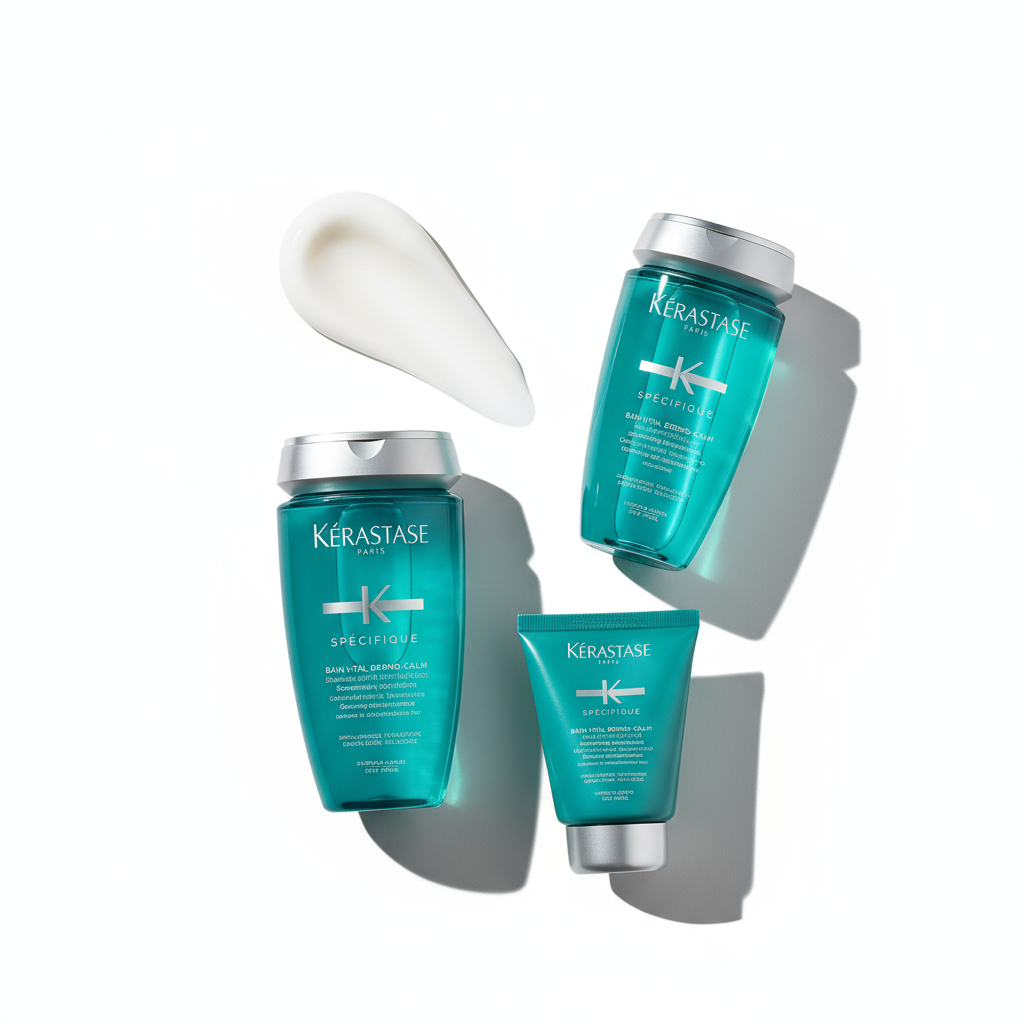
For a scalp that simply feels dry, tight and sensitive, a soothing, hydrating cleanser such as Kérastase Spécifique Bain Riche Dermo-Calm is a gentler everyday choice, and Kérastase Spécifique Masque Hydra-Apaisant adds lightweight moisture to dry lengths while keeping the scalp comfortable. If your scalp is reactive to fragrance or new products, see our sensitive scalp guide first.


If your hair lengths are dry as well, treat those separately with conditioner or a mask. Our complete dry hair guide explains how to build that part of the routine.
Should you put oil directly on a dry scalp?
Not automatically. A small amount of an appropriate pre-wash product may feel comfortable for some people, but heavy oiling can create residue and is not a treatment for every cause of flaking or itching. If you do use an oil, keep the amount modest and make sure it washes out cleanly.
For dry hair lengths, oils can be very useful — but that is a different job from treating scalp skin.
Why can a dry scalp feel worse during a Cape Town winter?
Cooler weather, wind, indoor heating and hotter showers can all change how skin feels. At the same time, longer or colour-treated hair may become drier through the lengths, so winter is often when clients start adding richer products everywhere.
Instead, keep the routine targeted: gentle scalp care where needed, richer conditioning where the hair fibre needs it, and fewer unnecessary layers at the roots.
When should you stop treating it as simple dryness?
See a healthcare professional or dermatologist if you have persistent or severe redness, thick or sharply defined scale, sores, bleeding, marked tenderness, signs of infection, or unexplained/sudden hair loss. A stylist can help identify product build-up, hair damage and routine problems, but we do not diagnose medical scalp conditions. If you suspect psoriasis, our guide to scalp psoriasis and your hair explains how to keep salon visits comfortable while your dermatologist manages it.
The first question isn't 'Which product should I buy?' It's 'What does the scalp actually look and feel like?' Dryness, dandruff and build-up need different conversations. — Partners Hair salon team
Not sure whether it's dryness, dandruff or build-up?
Tell us how often you wash, what you use on your roots, when the itching or tightness appears and what the flakes look like. That gives a stylist far more useful information than simply saying 'my scalp is dry'.
Ask the Experts · Find your nearest Partners Hair salon · Shop dry-scalp care
Frequently asked questions
Can dry scalp cause flakes?
Yes. Dry scalp can shed small flakes, but flakes alone do not prove that dryness is the cause. Dandruff, product residue and scalp conditions can also flake.
Why does my scalp feel tight after shampooing?
Very hot water, cleansing technique or a shampoo that does not suit your scalp can contribute. Try comfortably warm water and a gentler routine, and reassess if the tightness continues.
Can I use conditioner on my scalp?
Most conventional conditioners are intended primarily for the hair lengths. Unless the product is specifically designed for scalp application, concentrate it from the mid-lengths downward.
Will hair oil cure a dry scalp?
No single oil can be assumed to cure scalp dryness. Oils may temporarily reduce the feeling of dryness for some people, but they can also contribute to build-up and will not address dandruff or medical scalp conditions.
Why is my scalp dry but my hair oily?
Scalp symptoms and the appearance of the hair can overlap in complicated ways. Product build-up can also feel uncomfortable while making the roots look oily. If the combination persists, simplify the routine and have the scalp assessed.
Can dry scalp cause hair loss?
Simple dryness is not the same thing as a hair-loss condition. If you notice significant or sudden shedding, thinning, bald patches or scalp inflammation, seek appropriate professional or medical assessment rather than assuming dryness is responsible. See our hair loss and hair growth guide for the broader topic.
Part of our complete Scalp Health guide. Continue with our guides to itchy scalp, sensitive scalp, dandruff, dry scalp vs dry hair and professional scalp care.
Advice from salon-trained professionals. Partners Hair — 24 salons across Cape Town, serving clients since 1984.
Share:
Sensitive Scalp: How to Care for It Without Making It Worse
Sensitive Scalp: How to Care for It Without Making It Worse