



Expert guidance from the Partners Hair salon team, with Fairouze Smith, Men’s Grooming Specialist & Trainer at Partners Men Tyger Valley · September 2026
An itchy scalp is a symptom, not a diagnosis. Dandruff, dryness, product build-up, irritation and some scalp conditions can all itch — which is why repeatedly changing shampoo without understanding the pattern often gets you nowhere. Start by looking at when the itch happens and what else is happening on the scalp.
Key takeaways
- Itching can come from several different causes, so the best product depends on what is driving it.
- Flakes do not automatically mean dry scalp, and an oily scalp can have dandruff.
- If the itch started after a new product or colour service, irritation or sensitivity belongs high on the list.
- Dry shampoo, styling products, sweat and incomplete rinsing can contribute to build-up and discomfort.
- Hot water and scratching can make an irritated scalp feel worse.
- Persistent redness, thick scale, sores, pain or unexplained hair loss needs appropriate assessment rather than stronger cosmetic products.
Why is my scalp itchy?
The useful question is not simply “What shampoo stops itching?” It is “What changed, and what does the scalp look and feel like when it itches?” Timing gives useful clues. Itching immediately after washing is a different pattern from itching that appears on day three under layers of dry shampoo, or an itch that begins soon after a colour service.
Five common possibilities are dandruff, dryness, product build-up, irritation or sensitivity, and sweat or environmental exposure. More than one can be present at the same time.
What are the most common causes of an itchy scalp?
Dandruff: itching with recurring visible flaking may point toward dandruff. An oily scalp can have dandruff too. See our dandruff shampoo guide.
Dryness: a scalp that feels tight or uncomfortable, particularly after washing or during colder weather, may need a gentler routine. Read our dry scalp guide.
Product build-up: repeated dry shampoo, oils and styling products can leave residue at the roots. If the hair feels coated or the scalp becomes uncomfortable several days after washing, simplify the routine and cleanse thoroughly.
Irritation or sensitivity: if symptoms begin after introducing a new shampoo, styling product, fragrance or colour service, consider what changed. Stop using a suspected new cosmetic product if it is causing irritation and seek appropriate assessment if the reaction is significant. Our sensitive scalp guide explains how to calm a reactive scalp and spot triggers.
Sweat and environment: exercise, hats, heat and perspiration can make an already-sensitive scalp less comfortable, particularly when combined with styling-product residue.
Itchy scalp with flakes: is it dandruff or dryness?
You cannot reliably diagnose the cause from flake size alone. Dryness and dandruff need different conversations, and product residue can mimic flaking. Look at the whole pattern: oiliness, tightness, redness, timing, product use and whether the problem keeps returning.
For a broader comparison, continue to our complete Scalp Health guide.
What should you change first?
- Stop scratching. Fingernails can damage already-irritated skin.
- Turn down the shower temperature. Use comfortably warm rather than very hot water.
- Simplify what touches the scalp. Temporarily reduce unnecessary oils, serums, sprays and repeated dry-shampoo layers.
- Rinse thoroughly. Shampoo and conditioner residue can contribute to discomfort.
- Think about timing. Note whether itching starts after washing, after exercise, after a product, after colour or several days into your wash cycle.
- Treat the likely cause. Do not automatically reach for anti-dandruff shampoo if dandruff is not actually the issue.
Which professional products can help an itchy scalp?
Browse our curated Itchy Scalp collection and broader Scalp Care collection. Product choice should follow the likely cause rather than the word “itchy” alone.
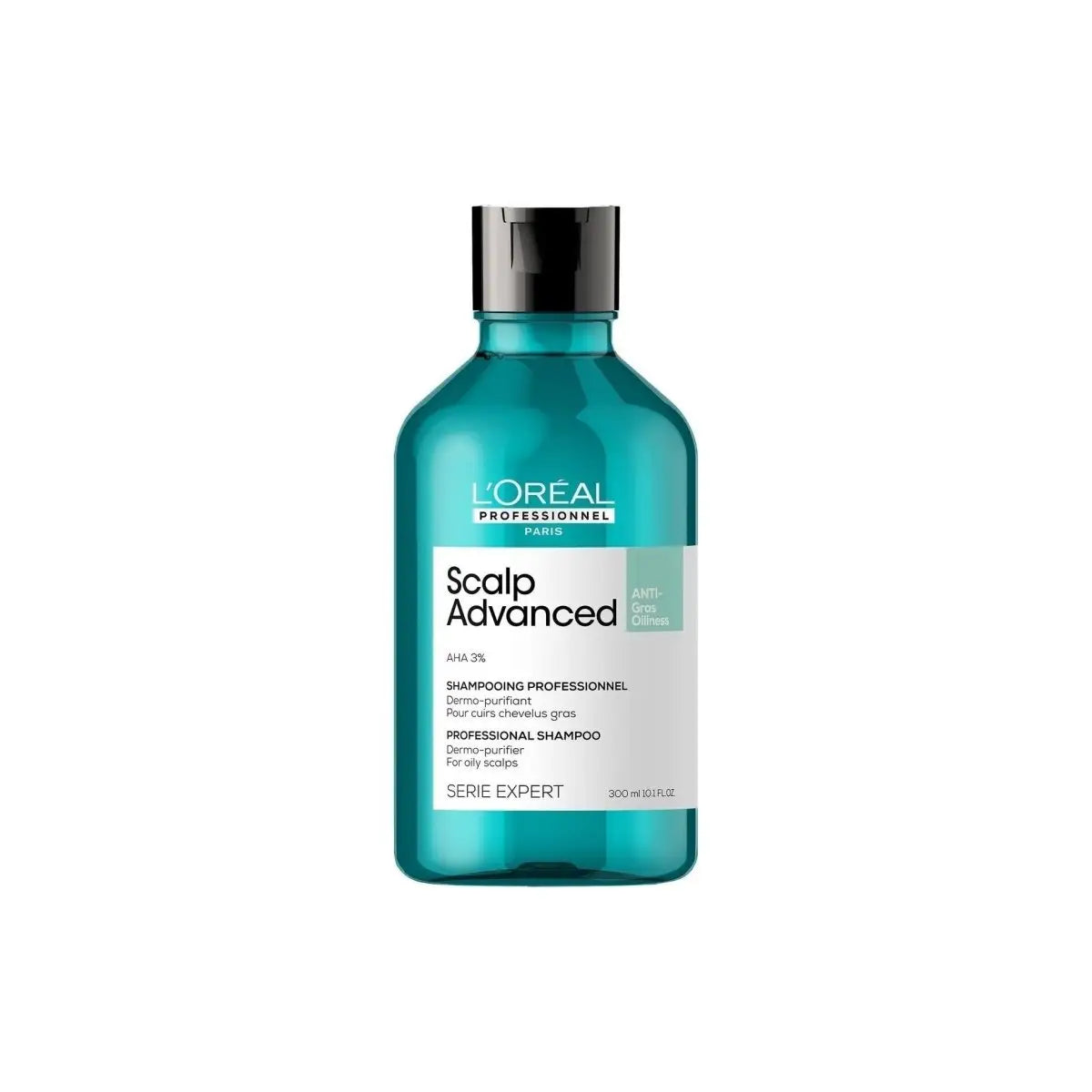
When itching accompanies dandruff, L’Oréal Professionnel Scalp Advanced Anti-Dandruff Dermo-Clarifier Shampoo is one professional option. Kérastase Symbiose Bain Crème Anti-Pelliculaire is another targeted anti-dandruff cleanser designed for a dry or sensitive-feeling scalp.


If dandruff is not the issue, repeatedly using anti-dandruff products simply because the scalp itches may miss the real cause. A simpler cleansing routine or removal of an irritating product may be more relevant. If the scalp feels reactive or tingly rather than flaky, a gentle soothing cleanser such as L’Oréal Professionnel Scalp Advanced Anti-Discomfort Dermo-Regulator Shampoo is a more sensible starting point.

Fairouze’s scalp check

Ask the Expert
Fairouze Smith
Men’s Grooming Specialist & Trainer · Partners Men Tyger Valley · 17 years’ experience
Fairouze specialises in precision grooming as well as professional hair and scalp treatments. Her approach to an itchy scalp starts with the pattern rather than immediately adding another product.
What she would check first:
Is there redness? · Are there flakes? · Does the scalp feel oily or tight? · When did the itching start? · What changed in the routine?
Why does my scalp itch after washing?
Look at water temperature, shampoo choice, technique and rinsing. Very hot water and aggressive scrubbing can aggravate an uncomfortable scalp. If itching consistently begins immediately after a particular product, stop and reassess that product rather than assuming you need to cleanse harder.
Why does my scalp itch a few days after washing?
Oil, sweat, dry shampoo and styling residue may be accumulating. If your scalp becomes uncomfortable by day two or three, forcing yourself to stretch the wash for longer is not necessarily helpful. Cleanse according to what your scalp needs.
Can Cape Town weather affect an itchy scalp?
Yes, indirectly. Hot weather and exercise increase perspiration, while colder weather and hotter showers can make dry or sensitive-feeling skin less comfortable. Wind, hats and time outdoors can also change how much product and residue sits at the roots.
The practical answer is not a completely different routine every season; it is adjusting cleansing frequency and product weight as your scalp changes.
When does an itchy scalp need more than salon advice?
A stylist can help identify product build-up, discuss your routine and recommend appropriate professional haircare. We do not diagnose medical scalp conditions. Persistent or severe redness, thick or sharply defined scale, open sores, bleeding, pain, signs of infection, bald patches or sudden/unexplained hair loss should be assessed by an appropriate healthcare professional or dermatologist. Thick, silvery, sharply defined patches are one example. Read scalp psoriasis and your hair for what a salon can and can’t do.
If hair loss is part of the concern, see our guide on when to see a trichologist about hair loss.
Not sure what is making your scalp itch?
Tell us when it starts, what products touch your roots, how often you wash and whether you have flakes, oiliness, tightness or redness. That gives our salon team a much better starting point.
Ask the Experts · Find your nearest Partners Hair salon · Shop itchy-scalp care
Frequently asked questions
Can dandruff make your scalp itch?
Yes. Dandruff commonly involves itching and flaking, but itching alone does not prove you have dandruff.
Why does my scalp itch after shampooing?
Hot water, aggressive washing, incomplete rinsing or a product that does not suit your scalp can contribute. Pay attention to whether the problem occurs after every wash or only after a particular product.
Can dry shampoo make your scalp itchy?
Repeated dry-shampoo layers can contribute to residue and build-up. Dry shampoo can extend a style, but it does not replace cleansing the scalp.
Can stress make scalp itching worse?
Stress can coincide with or aggravate some skin and scalp symptoms, but persistent itching should not automatically be attributed to stress. Look at the full pattern and seek assessment when needed.
Should I put oil on an itchy scalp?
Not automatically. Oil can add residue and will not treat every cause of itching. Work out whether the scalp is dry, flaky, oily, irritated or coated before adding another product.
How long should I wait before getting an itchy scalp checked?
Do not wait for an arbitrary number of weeks if symptoms are severe, worsening or accompanied by sores, marked redness, pain or hair loss. Mild irritation that does not settle after simplifying the routine also deserves assessment.
Part of our complete Scalp Health guide. Continue with Dry Scalp, Sensitive Scalp, Scalp Build-Up, our Dandruff guide, or browse professional Scalp Care.
Advice from salon-trained professionals. Partners Hair — 24 salons across Cape Town, serving clients since 1984.
Share:
Oily Scalp: Causes, Fixes and the Best Products in South Africa
Dry Scalp: How to Soothe It and Which Products Actually Help