


Reviewed by Nicole, Premier Stylist & Team Leader, Partners Hair Cavendish · September 2026
If your straightener has ever snagged a section of hair or made a faint sizzling sound, you've met baked-on product buildup. A good tool is only half the story. Keeping it clean is what keeps your results smooth, your hair protected and the tool lasting for years. Here's the method our salon teams use.
Key takeaways
- Product residue bakes onto plates and gets ironed back into clean hair. That's the snagging, dullness and breakage.
- Rubbing alcohol on a microfibre cloth, on barely-warm unplugged plates, does most of the work.
- Baking-soda paste and a soft toothbrush for stubborn buildup. Never a blade or abrasive pad.
- On dryers and hot-air brushes, the rear air-intake filter is the job everyone forgets.
- A ten-second wipe once the tool has cooled beats a monthly scrub.
Why is a dirty styling tool a problem?
Every time you use a heat protectant, serum or hairspray, a microscopic layer melts onto the plates. Over time it bakes into a sticky, carbonised film. A dirty plate then spreads heat unevenly, drags on the hair, and presses old, burnt product back into freshly washed strands — a hidden cause of dullness, snagging and breakage. On a dryer, trapped lint chokes the airflow and makes the motor work harder.
What do I need?
- A clean microfibre cloth
- Rubbing (isopropyl) alcohol
- Cotton buds
- A soft-bristle toothbrush
- A little baking soda, for stubborn buildup
- A bowl of warm, soapy water, for detachable parts only
Safety first: always unplug the tool and let it cool before cleaning. Never submerge the body of any electrical tool in water, and never use a metal blade or abrasive pad on the plates.
How do I clean a flat iron, step by step?

- Warm the plates slightly. Cold buildup is harder to shift. Plug in on the lowest setting for about ten seconds, then unplug. The plates should be barely warm, never hot.
- Wipe with alcohol. Dampen the microfibre cloth with rubbing alcohol and gently buff the plates. It dissolves serum and spray residue without harming the coating.
- Lift stubborn buildup. Mix a little baking soda with water into a paste, apply to the plates, and scrub gently with a soft toothbrush. A scratched coating means uneven heat for good, so never use a knife or abrasive sponge.
- Clean the crevices. Run a cotton bud along the grooves where the plates meet the housing.
- Buff dry. Finish with a clean, dry cloth and let the tool dry fully before its next use.
What does the salon do differently?
'In the salon a tool gets wiped between clients, every time, because the last thing you want is one client's hairspray ironed into the next client's hair. At home the equivalent is a ten-second wipe once the iron has cooled, on the days you've used product. Do that and you'll almost never need the baking soda. The tools that come back to us sticky and dragging are always the ones that were only ever cleaned when they started snagging.' — Nicole, Premier Stylist & Team Leader, Partners Hair Cavendish

How do I clean curling irons and wavers?
Exactly the same way: alcohol on a microfibre cloth, a baking-soda paste for stubborn spots, and a cotton bud around the clamp and seams. New to curling? See our curls and waves guide.
How do I clean a hair dryer or hot-air brush?

The number one job is the rear air-intake filter. Dust clogs the grille, the motor overheats, and airflow drops. Pop off or brush out the filter and pluck away the lint with tweezers or a soft brush. If your nozzle or diffuser is coated in dried product, detach it and soak it in warm, soapy water, then dry it completely before refitting. Never let water near the motor or body. On a hot-air brush, pull stray hairs from the bristles and wipe the barrel with a little alcohol on a cloth.
How often should I clean my tools?
- Quick plate wipe — after any session with heavy product, once cooled.
- Full plate clean — weekly, if you style daily.
- Dryer air filter — monthly.
- Deep clean and check for chips — monthly.
When should I replace rather than clean?
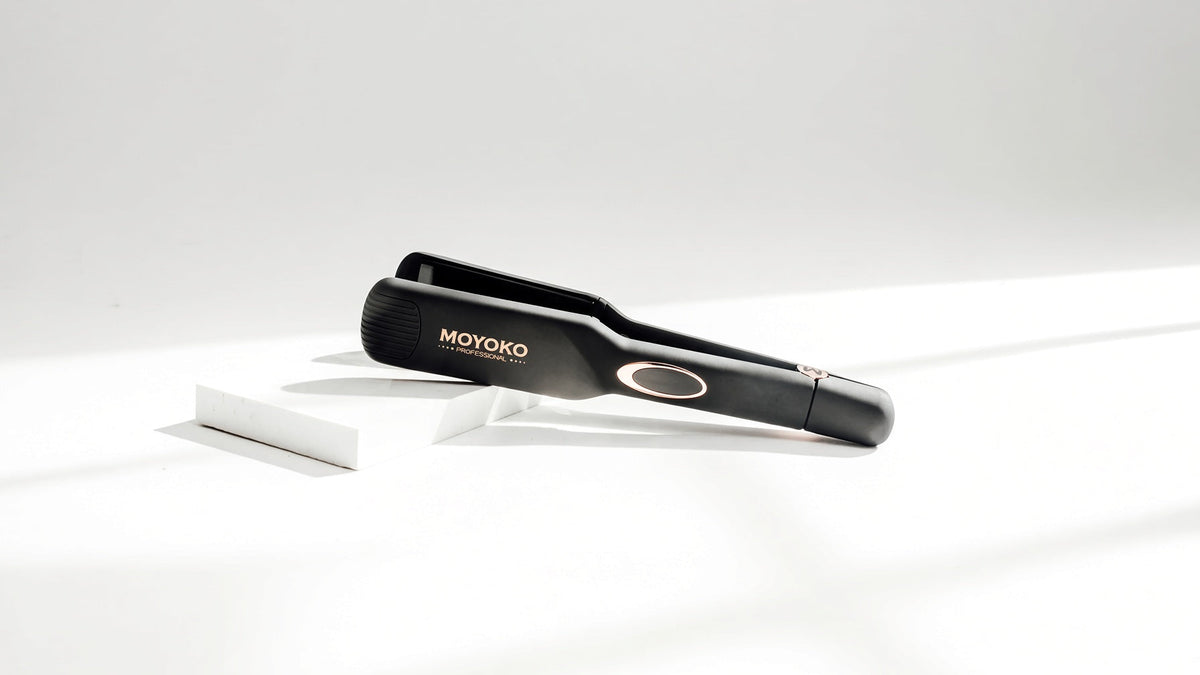
If the plate coating is chipped or deeply scratched, no amount of cleaning will protect your hair. Damaged plates create uneven heat and breakage, and that's the moment for a new tool. Browse the Moyoko range or read which Moyoko straightener to buy.
Prevention beats cleaning: a good heat protectant reduces the residue that bakes onto plates. Mist Beat the Heat before every style, and wipe the tool once it has cooled.
Personal consultations with Nicole. Not sure whether your iron is worth saving, or what's causing the snagging? Bring it to Nicole at our Cavendish salon.
Book a consultation · Shop Moyoko
Frequently asked questions
How often should I clean my flat iron?
Wipe the plates at least once a week with regular use, and after any session with heavy waxes, gels or oils, once the tool has cooled.
How do I get burnt product off the plates?
On a barely-warm, unplugged iron, use a baking-soda-and-water paste and a soft toothbrush, then buff clean with a damp microfibre cloth.
Can I use vinegar?
Yes. A mild solution of white vinegar or rubbing alcohol on a slightly damp cloth, in gentle circular motions. Never scrape the plates with a fingernail or any tool.
Can a dirty iron really damage my hair?
Yes. It distributes heat unevenly, snags and pulls, and irons old burnt product back into clean hair.
How do I clean my dryer's filter?
Unplug it, remove or brush out the rear intake filter, and pluck away the trapped lint.
Related: salon blowout at home and the complete Moyoko guide.
Advice from salon-trained professionals. Partners Hair — 24 salons across Cape Town, since 1984.
Share:
Curls & Waves at Home with Moyoko
Moyoko: The Complete Guide to Moyoko Styling Tools in South Africa