


The biggest cause of heat damage isn't your straightener — it's using it too hot. Most of us crank straight to maximum out of habit, when a lower setting would give the same finish with a fraction of the wear. Here's the right temperature for your hair type, and how to style smarter.
The short version
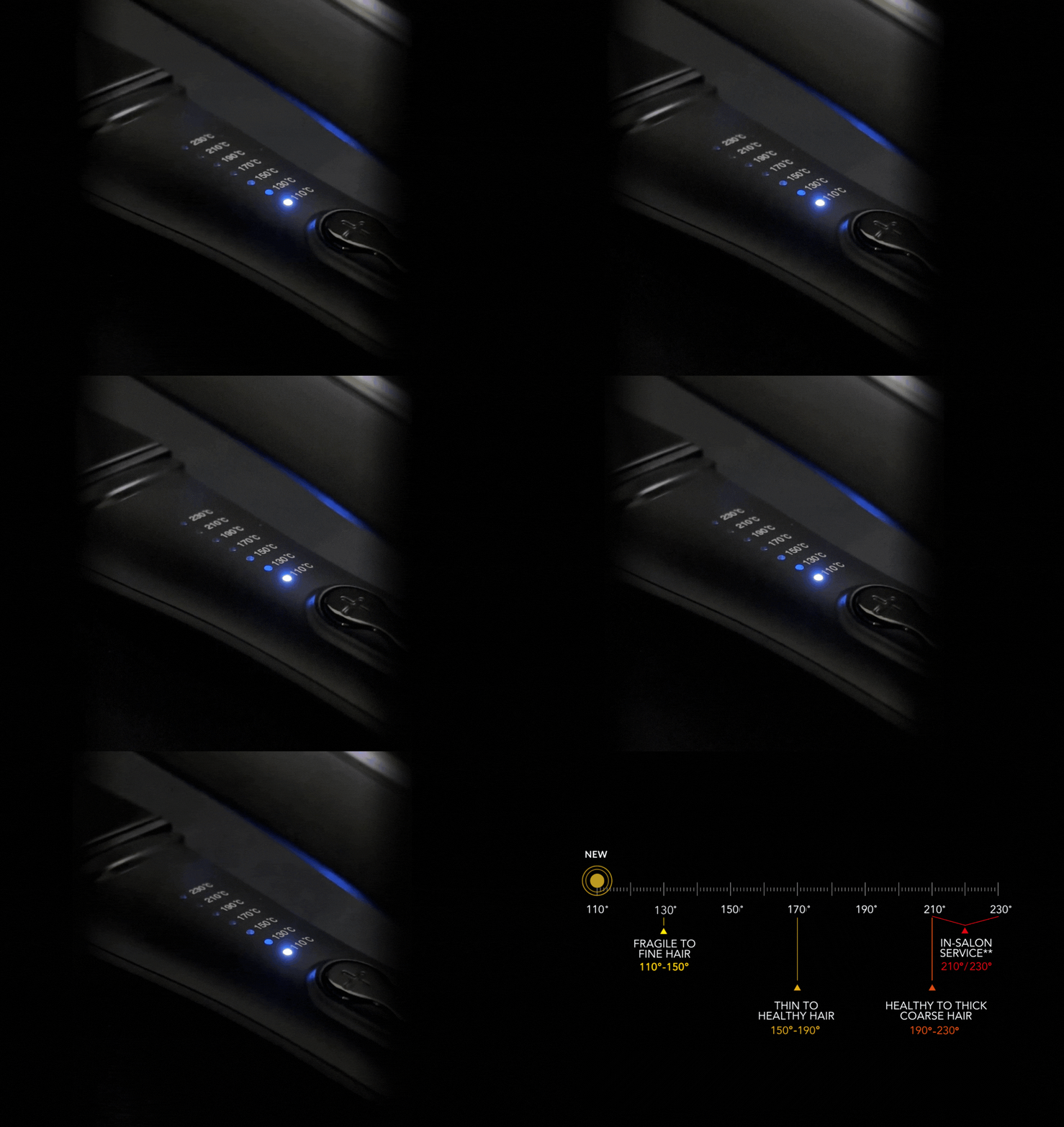
| Your hair | Temperature | Notes |
|---|---|---|
| Fine, bleached or fragile | 160–175°C | The lowest heat that still works |
| Normal, healthy | 180–200°C | The sweet spot for most people |
| Thick, coarse or very curly | 200–220°C | Only as high as you actually need |
Whatever your hair, stay under 230°C and never skip a heat protectant.

Why hotter isn't better
Hair is mostly keratin protein, and excessive heat permanently changes its structure — stripping moisture, lifting the cuticle and leaving it dull, brittle and prone to breakage. The damage is cumulative: every too-hot pass adds up. Because tourmaline ceramic heats the hair from within, you can often work a notch cooler than you would with a basic iron and still get a smooth result — here's how that technology works.
Finding your starting point
Start at the lower end of your range and only go up if you need to. A good iron should straighten a section in one or two passes. If you're going over the same piece again and again, the answer usually isn't more heat — it's a better tool for your hair. Thick or long hair, for instance, styles far faster on the wide-plate Colossal than on a standard iron.
Tool by tool
Flat irons — the myStyler and Colossal follow the table above. Curling — the myCurl runs 80–200°C across 25 settings, so use lower heat for loose waves and higher for tight, defined curls. Air styling — the myAirStyler uses gentler hot-air heat, which makes it a kind everyday option.

The non-negotiables
- Always apply a heat protectant first — it's the single best thing you can do.
- Never straighten soaking-wet hair; get it fully dry first.
- Work in slow, deliberate passes rather than lots of quick ones.
- Let the tool cool fully before storing.
Our salon teams' rule: fewer passes at the right temperature beat repeated passes on high heat. Let the tourmaline do the work — it's gentler and the finish lasts longer.
Signs you're using too much heat
A burning smell, white steam coming off dry hair, a straw-like or brittle texture, sudden dullness or snapping strands all mean the heat is too high. Dial it down a setting or two — your hair will thank you.
Veaudry makes it easy
Every Veaudry iron adjusts from roughly 110°C to 230°C with dual-microchip temperature control and an automatic safety shut-off, so you can set the right heat and trust it to hold. As an authorised stockist, everything we sell is 100% genuine, carries a 1-year guarantee, and ships free over R390.
Frequently asked
What's the safest temperature to straighten hair?
The lowest one that gives a smooth result — usually 160–185°C for most people. Fine or coloured hair should stay at the bottom of that range.
Can I straighten coloured or bleached hair?
Yes — keep to 160–175°C and always use a heat protectant to help preserve both tone and condition.
Is 230°C too hot?
It's the ceiling, not the target. Only thick or coarse hair should approach it; most hair styles beautifully well below it.
Does a lower temperature really protect my hair?
Yes. Heat damage is cumulative, so lower heat and fewer passes mean noticeably less long-term wear.
Set the right heat, get the right result. Explore Veaudry's adjustable tools, or read our straightener buyer's guide.
Shop all VeaudryRead the buyer's guide
Share:
Tourmaline vs Ceramic Straighteners: What's the Difference (and Does It Matter)?
How to Get Salon Curls at Home with Veaudry