



TL;DR:
- Heat damage builds up gradually — by the time you notice it, it's been accumulating for months
- Signs: rough, dry mid-lengths, frizz that won't smooth, breakage at the ends, styles that no longer hold
- Heat protection before every styling session is the most important preventative step
- Moisture alone won't fix heat damage — if the hair feels weak or snapping, you need a repair treatment too
- Lower your tool temperature — most hair doesn't need 230 degrees
Heat damage is the most common hair concern we see in our salons — and the most preventable. It doesn't happen after one blow-dry. It builds up session by session, tool by tool, without protection. By the time the hair feels dry, rough and won't smooth no matter what you try, the damage has been accumulating for months.
The good news: it's improvable. Here's what works, from someone who sees it every day.
Meet the experts:
Royston and Warren at Cavendish Square — Judy, head trainer — Lewis, owner — Jackie at Gardens Centre — Debbie and Nikí at V&A Waterfront — Danny and Charlene at Canal Walk — Lynette, Samantha and Dominique at Constantia Village
01 — How to Tell If Your Hair Is Heat Damaged
Heat-damaged hair has a specific texture. It feels rough and dry all along the mid-lengths — not just at the ends. Frizz is persistent and difficult to smooth even with products that used to work. Styles don't hold as well as they used to. Ends may look thin or slightly see-through.
"The telltale sign is roughness along the whole shaft, not just the tips," says Nikí at the Waterfront. "Dry hair usually feels worst at the ends. Heat damage feels rough all the way up because the cuticle has been compromised repeatedly along the length. You can feel the difference when you run your fingers from root to tip."
02 — Use Heat Protection. Every Time. No Exceptions.
This is the most important change you can make — both for repairing heat-damaged hair and preventing further damage while you recover.
"If a client comes to me with heat damage and asks what one thing they should change, it's this," says Debbie at the Waterfront. "Apply heat protectant to damp hair before blow-drying. Apply it to dry hair before straightening or curling. Every single time. Not most of the time. Every time."
Turn your tool temperature down too. "150 to 180 degrees is enough for fine hair. No higher than 200 for thick hair," says Royston at Cavendish. "The highest setting is rarely necessary and does the most damage."
03 — Weekly Mask Alongside a Repair Treatment
For heat-damaged hair, a weekly mask addresses softness and conditioning — but if the hair feels weak, brittle or is snapping, you also need a repair treatment that works at the structural level.
"Moisture and repair do different things," says Lewis. "A mask makes the hair feel softer. A repair treatment like K18 or Redken Acidic Bonding Concentrate rebuilds the protein bonds that heat has broken. You need both in the routine, not one or the other."
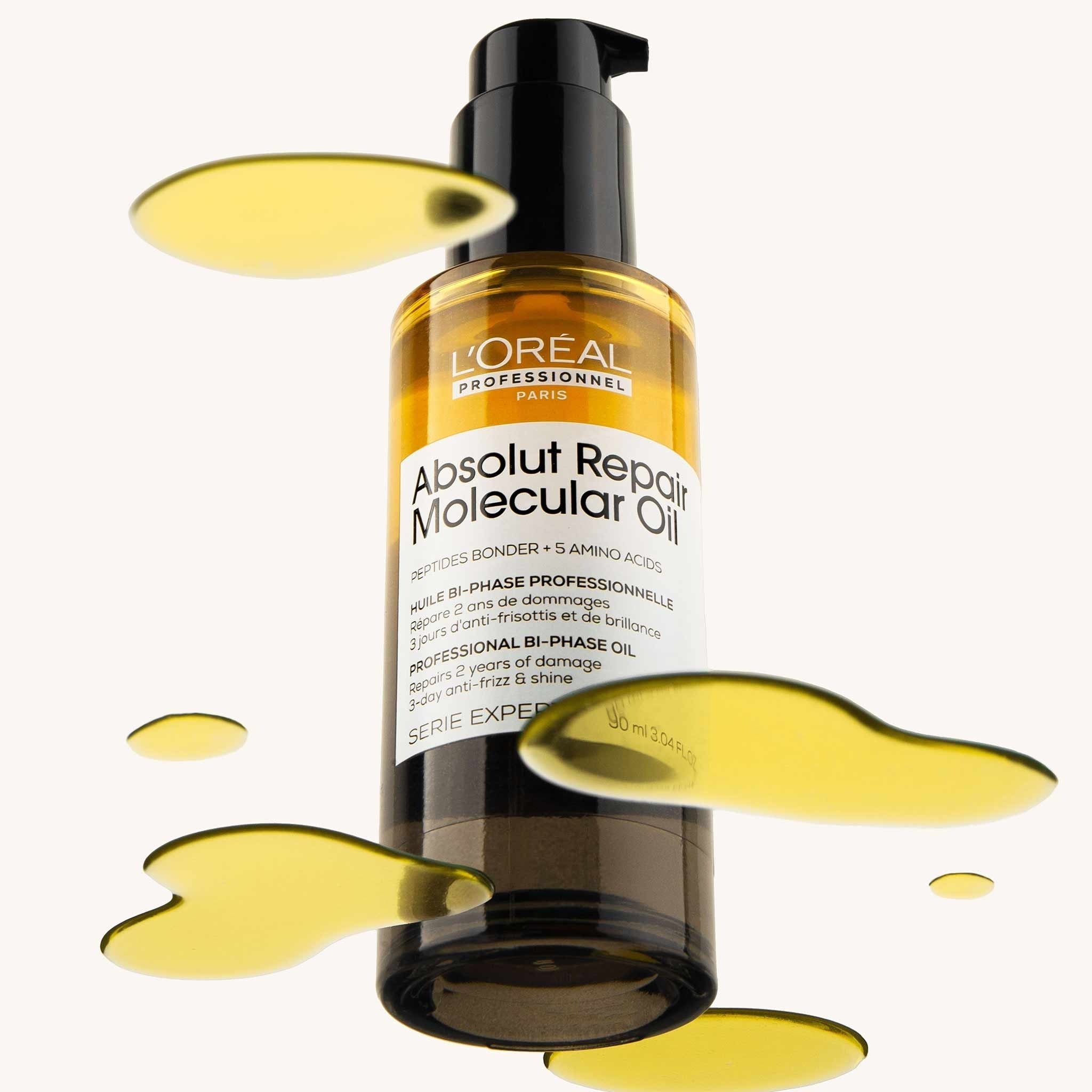
Repair-focused ranges for heat-damaged hair: K18 Leave-In Molecular Repair — Redken Acidic Bonding Concentrate — Kérastase Résistance — L'Oréal Professionnel Absolut Repair.
For dryness alongside heat damage: Kérastase Nutritive — Redken All Soft — Moroccanoil Hydration.
04 — Leave-In Conditioner Before Every Styling Session
A leave-in conditioner applied after washing and before heat protection prepares the hair for styling by filling gaps in the cuticle and reducing friction during blow-drying. It's a protective buffer that makes a real difference to how heat-damaged hair feels after styling.
"Apply leave-in to damp hair, work it through the mid-lengths and ends, then apply heat protectant on top," says Charlene at Canal Walk. "That combination gives the hair two layers of protection before the heat hits. Clients who do this notice the hair feels smoother after styling — not rougher."
05 — Trim the Ends
If the ends are split, breaking or see-through, product alone won't fix them. Trimming removes the worst damage and makes the rest of your routine more effective — the hair tangles less, looks healthier, and responds better to conditioning.
"I know clients don't want to hear this when they're trying to grow their hair," says Judy, head trainer. "But split ends travel. The longer you leave them, the higher they go up the shaft. A small trim every eight to ten weeks saves more length long-term than avoiding one does."
06 — Reduce Heat Frequency — You Probably Don't Need It Every Day
You don't have to stop using heat tools entirely — but reducing frequency gives the hair time to recover between styling sessions. Air drying when possible, stretching washes so you style less often, and using lower heat settings all reduce cumulative damage.
"Even one or two fewer heat styling sessions per week makes a measurable difference over a month," says Samantha at Constantia. "If you're blow-drying every day, try every other day. The hair will feel noticeably better within a few weeks just from that change alone."
Frequently Asked Questions
How do I know if my hair is heat damaged?
Rough, dry texture along the mid-lengths (not just ends), persistent frizz that doesn't smooth, loss of shine, and increased breakage are the main signs. Styles that no longer hold as well as they used to is another indicator.
Can heat-damaged hair be repaired?
The feel and manageability can be significantly improved. Bond-building treatments restore protein structure. Moisture treatments improve softness. Split ends cannot be repaired — they need trimming.
What is best for dry hair from heat styling?
Heat protection before every session, a weekly mask, a repair treatment if the hair feels weak, leave-in conditioner, and reduced tool temperatures. These five changes together make the biggest difference.
Should I use a mask or a repair treatment?
Both. A mask addresses softness. A repair treatment addresses structural damage. Heat-damaged hair usually needs both — alternate between a moisture mask and a repair treatment week by week if needed.
Is oil enough for heat-damaged hair?
No. Oil smooths the surface and adds shine, but it doesn't address the structural damage from heat. You still need conditioner, a mask, a repair treatment, and heat protection in the routine.
What temperature should I use on heat-damaged hair?
150–180°C for fine hair. No higher than 200°C for thick hair. Always use heat protection first. The highest setting on your tool is almost never necessary — and does the most damage.
Shop professional care for heat-damaged hair at Partners Hair, or book with one of our stylists for personalised advice. Free delivery on orders over R390.
Share:
Dry Damaged Hair: How to Tell the Difference and What to Use
Hair Masks for Dry Hair: A Salon Guide to Softer Hair