



TL;DR:
- Dry hair needs moisture. Damaged hair needs repair. Many people need both — but the treatments are different
- If your hair feels rough and dull, it's probably dry. If it feels weak, stretchy or snapping, it's damaged
- Moisture alone won't fix structural damage — you need a bond-building or repair treatment too
- Split ends can't be repaired by product — a trim is the only real solution
- Heat protection is the single most preventable cause of ongoing damage
Dry hair and damaged hair look alike and feel similar — rough, dull, frizzy, hard to manage. But they're not the same thing, and using the wrong treatment for the wrong problem is why so many people feel like nothing works on their hair.
Here's how to tell the difference — and exactly what to do about it.
Meet the experts:
Royston and Warren at Cavendish Square — Judy, head trainer — Lewis, owner — Jackie at Gardens Centre — Debbie and Nikí at V&A Waterfront — Danny and Charlene at Canal Walk — Lynette, Samantha and Dominique at Constantia Village
01 — Dry vs Damaged: How to Tell
Dry hair feels rough, dull or frizzy — but the structure is still intact. It tangles easily, looks flat and lacks shine, but it doesn't break easily and feels reasonably strong when you pull a strand.
Damaged hair feels weak. It may be stretchy when wet (a sign of broken protein bonds), snap when combed, have ends that look thin or see-through, or feel rough even after conditioning.
"The wet stretch test is the most useful one," says Lewis. "Take a wet strand and gently stretch it. Healthy hair has some elasticity and springs back. Damaged hair stretches further than it should, feels gummy, or snaps without much tension. That tells you immediately whether you're dealing with dryness or structural damage."
Hair can be both dry and damaged — in which case you need to address both.
02 — What to Use for Dry Hair
If your hair is dry but still structurally sound, the focus is moisture and nourishment. A consistent routine of sulphate-free shampoo, conditioner, weekly mask and leave-in will make a significant difference within a few weeks.
"The weekly mask is where most clients see the biggest change," says Jackie at Gardens Centre. "Not a conditioner — a proper mask, left on for five to ten minutes. That's the step that actually moves the needle on dry hair."
Strong options for dry hair: Kérastase Nutritive — Redken All Soft — Moroccanoil Hydration — Pureology Hydrate.
03 — What to Use for Damaged Hair
Damaged hair needs repair and strengthening — not just moisture. Bond-building treatments work at the structural level to restore broken disulfide bonds caused by bleach, colour and heat. Protein treatments reinforce the cortex and reduce breakage.
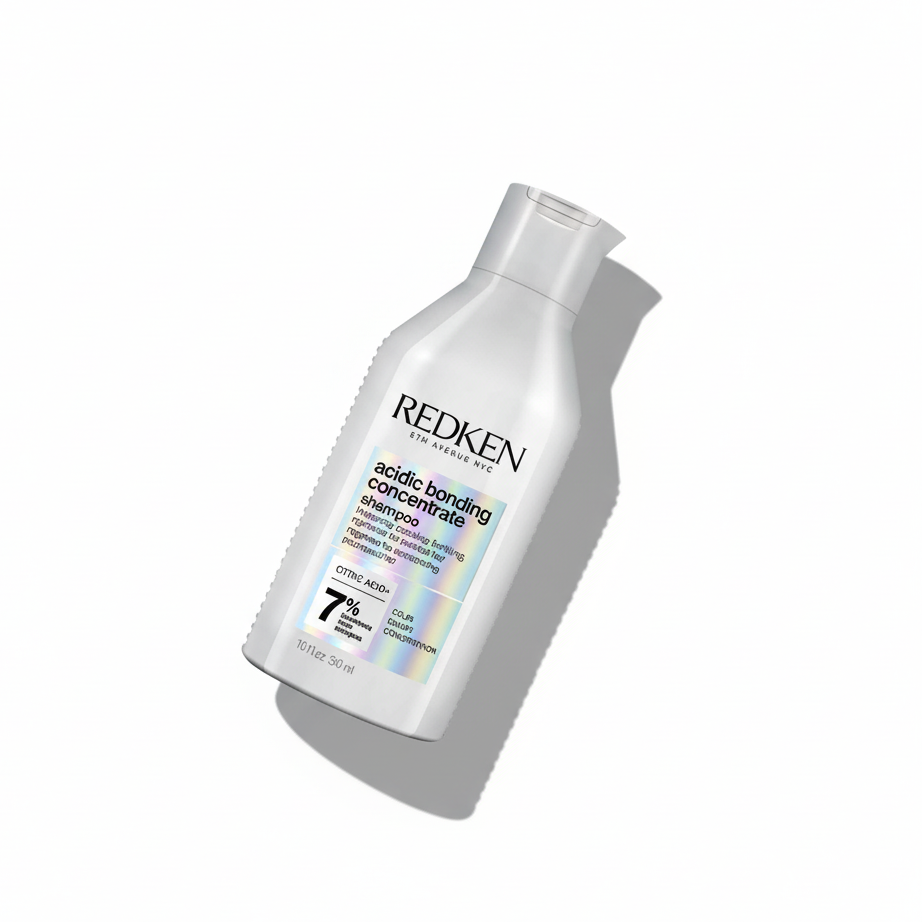
"Moisture makes damaged hair feel better temporarily," says Royston at Cavendish. "But it doesn't fix the underlying structure. K18, Redken Acidic Bonding Concentrate, Kérastase Résistance — these work differently. They're not just conditioning the surface, they're rebuilding what was broken."
Professional repair ranges: K18 Leave-In Molecular Repair — Redken Acidic Bonding Concentrate — Kérastase Résistance — L'Oréal Professionnel Absolut Repair — Joico K-Pak.
04 — The Routine for Both Dry and Damaged Hair
If your hair is both dry and damaged — which is common after bleach, heavy colouring or prolonged heat styling — you need both moisture and repair in the same routine. The key is balance: too much protein without moisture makes hair stiff; too much moisture without repair leaves damage unchecked.
- Shampoo: gentle, sulphate-free, moisture or repair-focused
- Conditioner: mid-lengths to ends, every wash
- Mask: once a week — moisturising or repair-focused depending on your hair's main need
- Repair treatment: K18 or Acidic Bonding applied as directed — usually after shampooing, before conditioner
- Leave-in: after every wash, on damp hair
- Heat protection: every time — non-negotiable
- Oil or serum: small amount on ends to finish
05 — Heat Damage: The Most Preventable Cause
Heat damage is the most common cause of ongoing, cumulative damage that clients don't realise is building up. Each session without heat protection leaves the hair slightly worse — rougher cuticle, more porous, more prone to breakage.
"I can usually tell when a client hasn't been using heat protection," says Nikí at the Waterfront. "The hair feels rough all along the mid-lengths, not just at the ends. That's the pattern of repeated heat exposure without protection. It's entirely preventable. One good heat protectant, applied every time, makes a measurable long-term difference."
06 — When to Get a Trim
If the ends are split, thin, breaking or see-through, product can improve the feel but won't seal the splits permanently. A trim removes the worst damage and makes everything else in the routine work better.
"Clients often resist a trim because they're trying to grow their hair," says Judy, head trainer. "But split ends travel up the shaft. The longer you leave them, the more you'll eventually need to cut. A small trim every eight to ten weeks saves more length in the long run than avoiding one."
Frequently Asked Questions
Is my hair dry or damaged?
Dry hair feels rough, dull and frizzy but is still structurally strong. Damaged hair feels weak, stretchy when wet, or snaps easily. Do the wet stretch test — if a strand stretches excessively or breaks without much tension, that's damage.
What is best for dry damaged hair?
A routine that combines moisture and repair. Sulphate-free shampoo, conditioner, weekly mask, a bond-building treatment like K18 or Redken Acidic Bonding Concentrate, leave-in care, and heat protection every time.
Can dry damaged hair be fixed?
The feel and manageability can be significantly improved. Bond-building treatments restore structure. Moisture treatments improve softness. Split ends, however, cannot be repaired — only removed by trimming.
Does dry hair cause breakage?
Very dry hair can become brittle and more prone to snapping during brushing and styling. But ongoing breakage usually indicates structural damage rather than just dryness.
Should I use a mask or a repair treatment?
Both, ideally — but for different purposes. A mask addresses softness and moisture. A repair treatment addresses structural damage. If your hair is dry but strong, a mask is enough. If it's breaking or weak, add a repair treatment.
What should I avoid if my hair is dry and damaged?
Heat without protection, overwashing, rough towel drying, aggressive brushing, and repeated colour or bleach services without a repair plan between appointments.
Shop professional care for dry and damaged hair at Partners Hair, or book with one of our stylists for personalised advice. Free delivery on orders over R390.
Share:
Overnight Treatments for Dry Hair: What Works Best?
Heat-Damaged Dry Hair: Signs, Causes & Salon Care Advice