



Reviewed by Mariska, Precision Cutting and Colour Expert, Partners Hair Somerset West · October 2026
TL;DR:
- Hair oil is a finishing step — it smooths the surface and adds shine, but it doesn't fix dryness from within
- Use far less than you think — 1 to 2 drops is usually enough, even for thick hair
- Apply to mid-lengths and ends only — never directly to oily roots
- Oil doesn't replace conditioner or a mask — it completes the routine
- Some oils can be used before heat styling, some can't — check the product
Every client who has ever accidentally made their hair look greasy with hair oil made the same mistake: too much. Oil is one of the most useful finishing products for dry hair — but the difference between a polished result and a greasy one is often just two drops.
Here's how to use it correctly.
Meet the experts:
Royston and Warren at Cavendish Square — Judy, head trainer — Lewis, owner — Jackie at Gardens Centre — Debbie and Nikí at V&A Waterfront — Danny and Charlene at Canal Walk — Lynette, Samantha and Dominique at Constantia Village
01 — What Hair Oil Actually Does
Hair oil works at the surface of the hair — it smooths the cuticle, adds shine, and gives dry, dull ends a polished look. It doesn't penetrate deeply to add moisture the way a mask does. It's a finishing step, not a treatment.
"Oil makes the hair look healthy," says Danny at Canal Walk. "A mask makes it feel healthy. You need both — but they do different things. Clients who use only oil and skip conditioning are managing dryness cosmetically. The underlying dryness stays."
02 — How Much to Use — This Is Where Most People Go Wrong
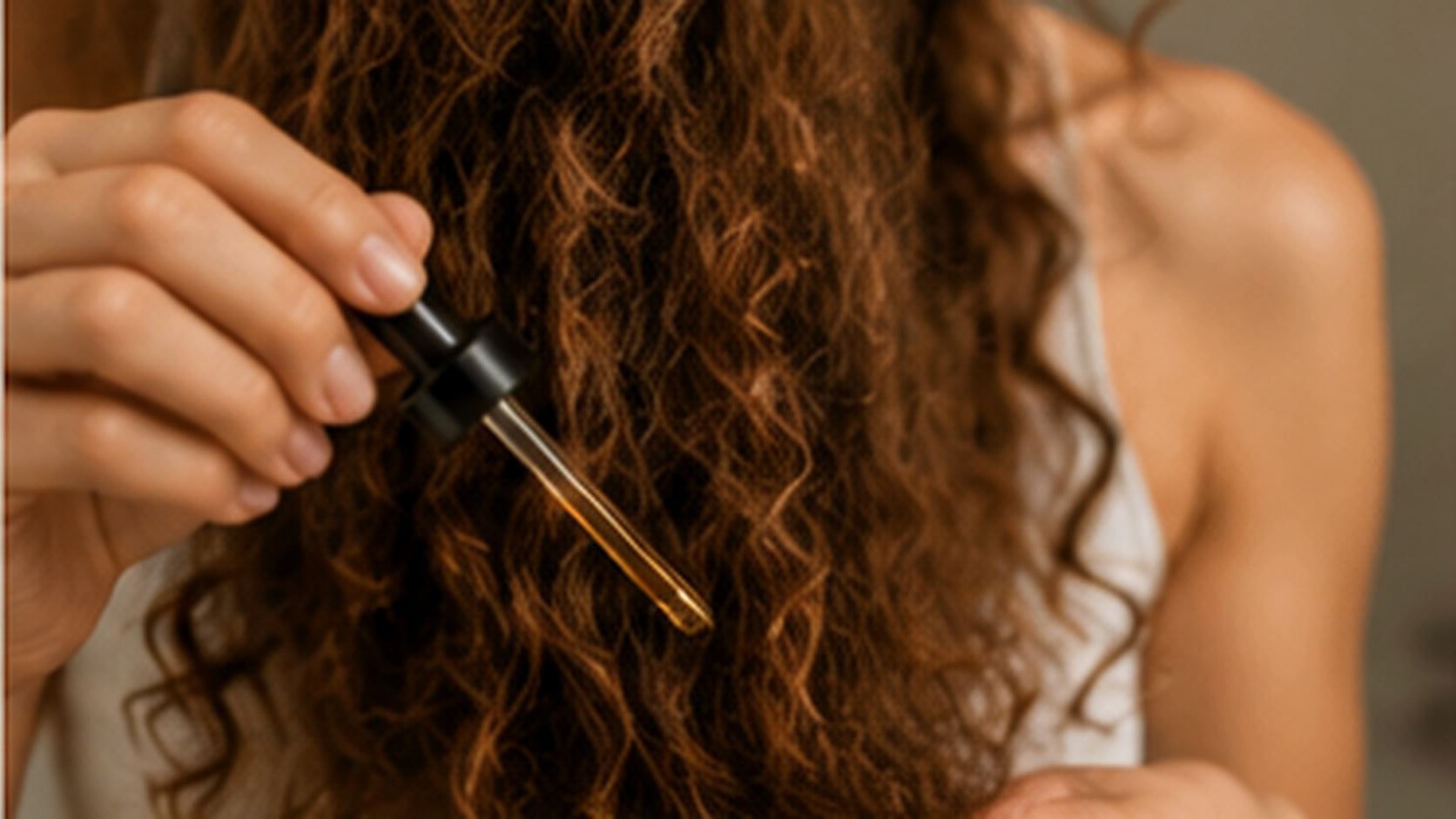
Fine hair: 1 drop. Medium hair: 1–2 drops. Thick, long or coarse hair: 2–3 drops maximum. Start with less than you think, rub between palms to distribute, then work through the mid-lengths and ends.
"Work it through your hands first," says Charlene at Canal Walk. "Don't apply it directly to the hair from the bottle. Rub your palms together, then rake your fingers through the ends. That gives even distribution without overloading any section."
03 — When to Apply — Damp or Dry
On damp hair before blow-drying: applies a very small amount to the ends for shine and smoothness during styling. On dry hair after styling: as a finishing step to polish the look and reduce frizz. Both work — the timing depends on what result you need.
"I prefer applying on damp hair before the blow-dry," says Nikí at the Waterfront. "It gives a smoother result during styling. On dry hair it's more for finishing and frizz control. Check whether your oil is heat-safe before using it pre-blow-dry — not all of them are."
04 — Best Hair Oils for Dry Hair
For dry hair, shine and moisture: Moroccanoil Treatment (the original — argan oil, works on most hair types) — Kérastase Elixir Ultime Original Oil (for medium to thick dry hair) — Kérastase Elixir Ultime L'Huile Legere (lightweight version for fine dry hair).


For dry frizzy hair: Redken Frizz Dismiss Smooth Force — Pureology Colour Fanatic Multi-Tasking Hair Beautifier (spray format, colour-safe).
For dry colour-treated hair: Any of the above, but applied carefully and mid-lengths to ends only. Colour-safe formulas preferred.
"Moroccanoil Treatment is honestly the most versatile," says Royston at Cavendish. "It works on almost every dry hair type, the scent is beautiful, and a little goes a long way. It's been a staple recommendation across all our salons for years."
05 — Oil Doesn't Replace Conditioner, Mask or Leave-In
A complete routine for dry hair: sulphate-free shampoo — conditioner every wash — weekly mask — leave-in conditioner — oil or serum on the ends. Each step does something different. Oil is step five, not a substitute for steps two, three or four.
"I see this often," says Lewis. "Clients who use oil every day and wonder why the dryness doesn't improve. Oil looks good. It doesn't treat the cause. The mask and conditioner treat the cause. The oil finishes the result."
06 — Can You Use Oil Overnight?
A small amount on the ends — yes. The ends are the driest part and benefit from extended contact time with nourishing ingredients. Keep it to one or two drops, mid-lengths to ends only, and use a satin pillowcase to reduce friction.

"Avoid applying oil to the roots or scalp overnight," says Samantha at Constantia. "Fine hair especially — you'll wake up with greasy roots and it's difficult to remove without washing. Keep it at the ends and you get the benefit without the mess."
Frequently Asked Questions
Is hair oil good for dry hair?
Yes — as a finishing step. It adds shine, smooths the cuticle surface and polishes dry ends. Paired with a complete routine it makes a real difference to how dry hair looks and feels.
Should I apply oil to wet or dry hair?
Both work. On damp hair before blow-drying for a smoother result. On dry hair after styling for finishing and frizz control. Check whether your oil is heat-safe before using pre-blow-dry.
Can hair oil make dry hair greasy?
Yes, if you use too much or apply near the roots. Start with one drop, work through your palms first, then apply to mid-lengths and ends only.
Is oil enough for very dry or damaged hair?
No. Oil is a finishing step. Very dry hair needs shampoo, conditioner, weekly mask, leave-in, and heat protection. Damaged hair also needs a repair treatment. Oil completes the routine — it doesn't replace it.
Which is better for dry hair — oil or leave-in conditioner?
They do different jobs. Leave-in conditioner softens and protects the hair structure. Oil smooths the surface and adds shine. Most dry hair routines benefit from both.
Can I use hair oil every day?
On the ends, yes — especially for thick, coarse or very dry hair. Fine hair should use a very small amount and only on the ends when needed.
Shop professional hair oils for dry hair at Partners Hair, or find your nearest salon for personalised advice. Free delivery on orders over R390.
Share:
Leave-In Conditioner for Dry Hair: When and How to Use It
How to Make Hair Colour Last Longer: The Colour-Treated Hair Care Routine