



TL;DR:
- Both an underactive thyroid (hypothyroidism) and overactive thyroid (hyperthyroidism) can disrupt the hair growth cycle and cause diffuse shedding
- Thyroid-related hair loss often appears before other symptoms — your hair may be signalling a problem before you feel unwell
- A standard TSH test doesn't always catch the full picture — ask for Free T3, Free T4, and thyroid antibodies if TSH is borderline
- Once thyroid levels are stabilised with treatment, shedding slows within 1 to 3 months. Visible regrowth takes 6 to 12 months
- Support your scalp with professional products during recovery — they help maintain follicle health while treatment works
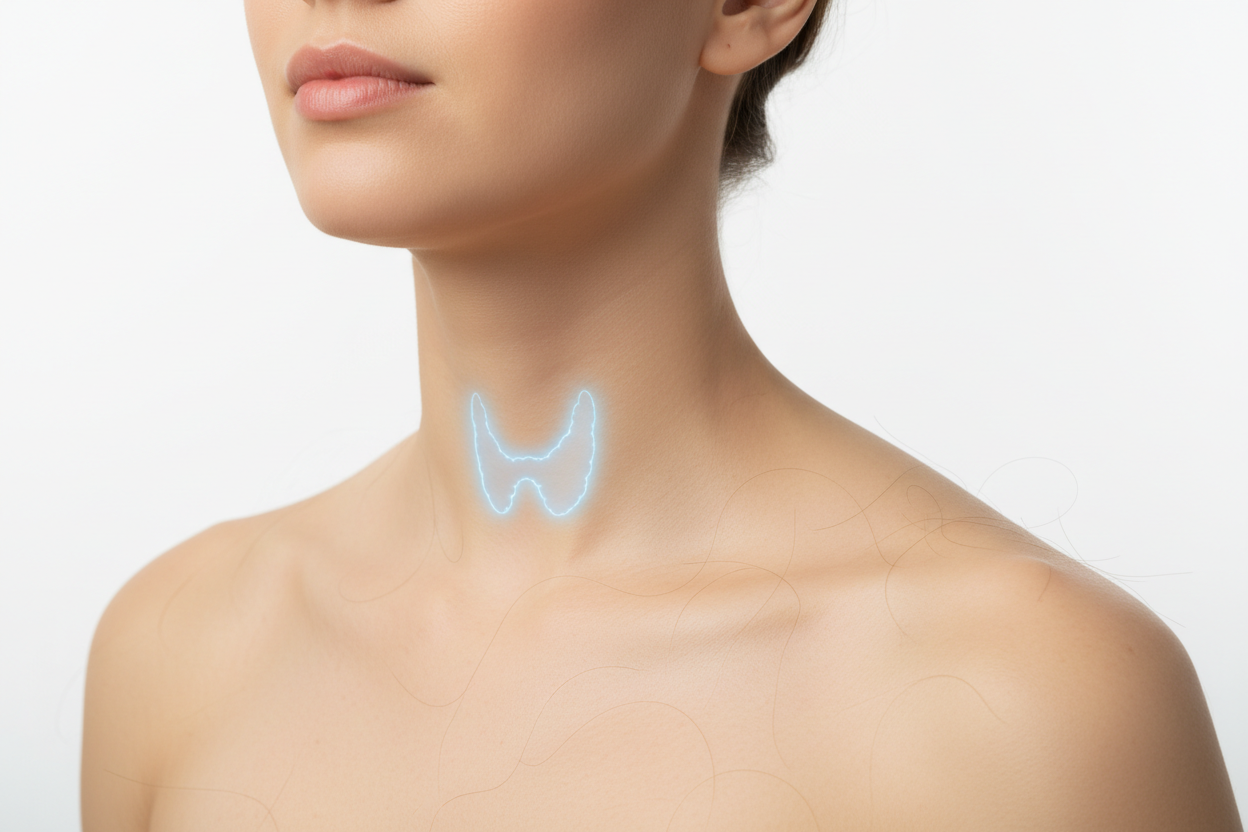
The thyroid is a small gland in your neck that regulates your metabolism, energy, and a surprising number of other body functions — including your hair growth cycle. When it's not working properly, your hair often shows it before anything else does. Thyroid-related hair loss is more common than most people realise, and it's frequently missed because the symptoms look similar to other types of shedding.
A note on expertise: This article explains thyroid-related hair loss and when to seek medical support. Diagnosis and treatment of thyroid conditions requires a GP or endocrinologist. Our stylists can advise on scalp care and product recommendations to support your hair during treatment.
01 — How the Thyroid Affects Hair
Thyroid hormones (T3 and T4) play a direct role in regulating the hair growth cycle. They influence how long follicles stay in the active growth phase and how quickly they cycle through rest and shedding. When thyroid hormone levels are too low (hypothyroidism) or too high (hyperthyroidism), this cycle gets disrupted — pushing more follicles into the resting and shedding phase than normal. The result is diffuse thinning across the whole scalp rather than patchy loss.
02 — Hypothyroidism: The More Common Cause
Hypothyroidism (underactive thyroid) is the more common cause of thyroid-related hair loss. The thyroid isn't producing enough hormone, which slows down many body processes — including hair growth. Signs beyond hair loss include fatigue and sluggishness even with enough sleep, weight gain without dietary changes, feeling cold constantly, dry skin and brittle nails, brain fog, constipation, depression or low mood, and slow heart rate. A distinctive sign of hypothyroidism is thinning of the outer third of the eyebrows, though this isn't present in everyone.
03 — Hyperthyroidism and Hashimoto's
Hyperthyroidism (overactive thyroid) can also cause hair loss. When the thyroid produces too much hormone, it speeds up the hair cycle — causing follicles to cycle through growth and shedding too quickly. Signs include unexplained weight loss, rapid heartbeat, feeling hot and sweating excessively, anxiety, and difficulty sleeping.
Hashimoto's thyroiditis is an autoimmune condition where the immune system attacks the thyroid, gradually causing it to underfunction. It's the most common cause of hypothyroidism and is significantly more prevalent in women. Hair loss can occur even when thyroid levels appear borderline rather than clearly abnormal.
04 — What Tests to Ask For
A standard TSH (thyroid stimulating hormone) test is the usual starting point — but it doesn't always give the full picture. Ask your GP for TSH, Free T3 and Free T4 (the active thyroid hormones), and thyroid antibodies (TPO and TgAb, to check for Hashimoto's). Some people have subclinical thyroid dysfunction where TSH is borderline but T3/T4 or antibodies indicate a problem. This can still cause hair loss even when a basic test comes back "normal".
05 — Treatment and Recovery
Thyroid-related hair loss is treated by addressing the thyroid condition itself — not just the hair. Hypothyroidism typically means thyroid hormone replacement medication prescribed by your doctor. Hyperthyroidism involves medication to reduce hormone production, radioactive iodine therapy, or surgery in some cases. Once thyroid levels are stabilised, hair shedding typically slows within 1 to 3 months. Visible regrowth takes longer — usually 6 to 12 months.
While levels are being treated, support your scalp and follicles with a gentle, sulphate-free shampoo with scalp-supportive ingredients, and consider a targeted hair growth serum with peptides or rosemary oil to stimulate follicle activity. Adequate protein and iron in your diet are both commonly low in people with thyroid issues and worth monitoring.
"Clients undergoing thyroid treatment often feel frustrated that their hair isn't recovering quickly," says Debbie at the Waterfront. "We always explain that the follicle needs time to re-enter the growth cycle even after levels normalise. A scalp routine supports that recovery and gives the follicles the best environment to respond. Patience and consistency matter more than urgency."
06 — Book a Scalp Consultation
If you suspect thyroid-related hair loss, the first step is a blood test with your GP. Once you have a diagnosis and treatment plan, a scalp consultation at Partners Hair can help you build a home care routine that supports recovery. Our stylists work regularly with clients managing medical hair loss alongside professional treatment.
Frequently Asked Questions
Can thyroid problems cause hair loss?
Yes — both an underactive thyroid and an overactive thyroid can disrupt the hair growth cycle and cause diffuse shedding across the scalp.
Will my hair grow back after treating my thyroid?
In most cases, yes. Once thyroid hormone levels are stabilised with treatment, shedding slows and hair regrows — though it can take 6 to 12 months to see full recovery.
What does thyroid hair loss look like?
Diffuse thinning across the whole scalp rather than patchy loss. Thinning of the outer eyebrows is a classic sign of hypothyroidism, though not everyone experiences this.
Can I have thyroid-related hair loss with a normal TSH?
Yes. Subclinical thyroid dysfunction — where TSH is borderline and Free T3/T4 or antibodies are abnormal — can still cause hair loss. Ask for a full thyroid panel, not just TSH.
What scalp care products help during thyroid treatment?
A gentle sulphate-free shampoo with caffeine or zinc, and a targeted serum with peptides or rosemary oil. Partners Hair stocks professional-grade options available online and in salon. A scalp consultation helps identify the right fit for your specific situation.
Book a scalp consultation at your nearest Partners Hair salon, or shop our hair growth range online. Free delivery on orders over R390.
Share:
Why Is My Hair Falling Out After Pregnancy? Postpartum Hair Loss Explained
Does the Pill Cause Hair Loss? Hormonal Contraception and Thinning Hair